Best Boutique Hotel Options for City Breaks: Curation & Strategy Guide
The modern urban getaway occupies a hyper-compressed temporal and spatial footprint. Unlike extended resort vacations, where itineraries unfold across weeks, and geographic friction is absorbed by passive days, a city break demands immediate environmental integration. Within a 48-to-72-hour window, the traveler must navigate transit hubs, cultural districts, culinary corridors, and acoustic shifts all while maintaining an underlying sense of cognitive rest and bodily recovery. In this environment, high-density commercial hotels often fail. Their sheer room scale, mechanical elevator delays, homogenized public lounges, and impersonal service models introduce operational friction at the exact moment a guest needs efficiency and quietude.
Consequently, boutique hotel properties typically operating between fifteen and eighty keys have transformed from niche lifestyle choices into essential instruments of urban exploration. Evaluating the best boutique hotel options for city breaks requires looking far beyond aesthetic minimalism, trendy lobby bars, or complimentary artisanal coffee. Authentic boutique hospitality in an urban setting is an architectural and spatial strategy. It balances micro-location placement, structural sound insulation, space-efficient room design, and localized concierge intelligence to serve as a low-friction base camp for urban immersion.
Navigating this sector requires a systematic understanding of how property scale, structural engineering, district placement, and pricing models intersect. This guide provides a definitive analytical framework for evaluating, selecting, and experiencing urban boutique accommodations. By examining spatial models, neighborhood dynamics, financial trade-offs, and common operational pitfalls, this analysis enables discerning travelers, corporate strategists, and hospitality architects to separate genuine urban curation from superficial marketing.
Understanding “Best boutique hotel options for city breaks.”
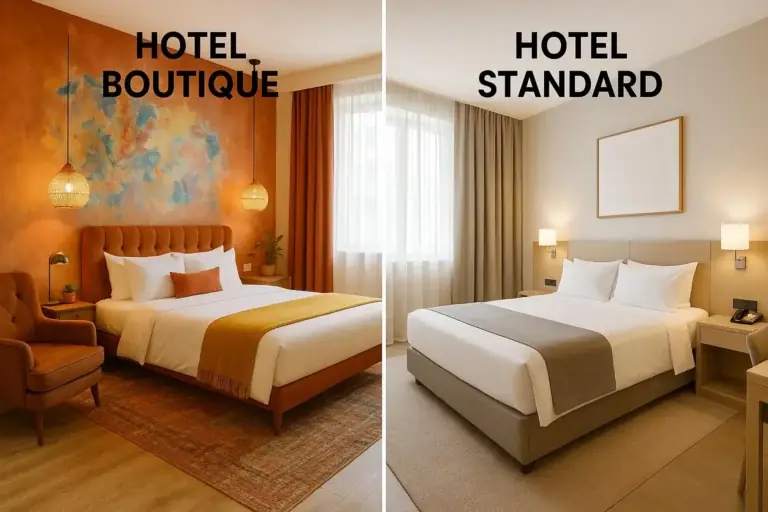
Analyzing the best boutique hotel options for city breaks requires a clear conceptual framework that separates cosmetic interior decoration from functional urban suitability. In popular travel media, the term “boutique” is frequently co-opted by large commercial brands operating 200-room “lifestyle” subsidiaries, or applied indiscriminately to small, poorly insulated historic conversions that lack professional service infrastructure. In an analytical context, a property qualifies as an elite urban boutique hotel only when its design and operating model satisfy four baseline conditions:
-
Restricted Key Count and Spatial Scale: Inventory is strictly capped, usually under 80 keys and ideally between 20 and 50 rooms. This physical boundary eliminates elevator wait times, prevents crowded breakfast queues, and maintains quiet public spaces.
-
Micro-Neighborhood Integration: The property is situated within a walkable, mixed-use sub-district rather than an isolated financial center or tourist-clogged arterial thoroughfare. This positioning places guests within immediate walking distance of authentic local infrastructure.
-
Acoustic and Environmental Shielding: Building materials and window assemblies incorporate high Sound Transmission Class (STC) ratings, double- or triple-glazed acoustic glass, and isolated HVAC ducting to block urban noise pollution (traffic, sirens, nightlife).
-
High-Density Spatial Efficiency: Room layouts optimize limited urban square footage through custom joinery, smart storage solutions, integrated lighting spectrums, and multi-functional furniture without sacrificing sleep architecture or movement paths.
Core Operational Differences: Commercial vs. Boutique City Lodging
-
Arrival & Transit Logistics: Large commercial hotels rely on multi-lane driveways, grand lobbies, and centralized check-in desks that create bottlenecks during peak hours. Urban boutique hotels utilize street-level private entrances, direct in-room or lounge check-ins, and keyless mobile entry, reducing arrival friction to minutes.
-
Neighborhood Connectivity: Commercial properties are frequently built in central business districts (CBDs) that turn quiet or desolate after business hours. Boutique hotels often occupy converted historic townhouses, industrial warehouses, or former civic buildings nestled within vibrant residential or arts districts.
-
Acoustic Environment: Commercial towers feature uniform glass facades that often vibrate under low-frequency city traffic noise and suffer from uninsulated interior corridors. Boutique conversions utilize thick masonry walls, interior light wells, and acoustic vestibules to create silent room microclimates.
-
Guest Service Model: Commercial service operates through departmental silos (front desk, concierge, room service, housekeeping) requiring multiple phone interactions. Boutique properties employ cross-trained lifestyle hosts or dedicated concierges who handle every guest touchpoint through a single, responsive communication line.
A frequent error made by urban travelers is prioritizing proximity to major tourist landmarks above all else. Booking a property directly adjacent to a major cathedral, central train station, or tourist plaza inevitably exposes guests to high ambient noise, pedestrian crowding, overpriced dining, and aggressive commercial activity. Evaluating the best boutique hotel options for city breaks requires assessing whether a hotel provides a peaceful residential sanctuary that remains conveniently connected to the broader urban transit network.
Deep Contextual Background
The evolution of urban boutique hospitality reflects broader historical shifts in urban planning, architectural preservation, transit speed, and consumer psychology over the past century.
Historical Trajectory of Urban Hospitality Architecture
-
The Grand Railway Hotel and Palace Era (Late 19th–Mid 20th Century)Urban lodging was historically anchored by massive railway hotels and grand palace properties built adjacent to central transit terminals. Examples like the St. Pancras in London or the Grand Hotel in Paris catered to wealthy travelers arriving via passenger rail. These properties featured expansive public rooms, high ceilings, and formal etiquette, acting as monuments to civic engineering and social status rather than quiet, personalized retreats.
-
The Mid-Century Commercial Tower and Corporate Standardization (1950s–1980s)The expansion of commercial aviation and corporate travel led to the dominance of standardized hotel chains. Characterized by high-rise concrete structures, uniform room modules, sealed glass curtain walls, and suburban-style parking garages, these properties prioritized predictability and scale.
-
The Early Boutique Pioneer Movement (1980s–2000s)Pioneered by independent hoteliers like Anouska Hempel, Ian Schrager, and Bill Kimpton, the boutique revolution emerged as a direct rejection of corporate standardization. Converting historic brownstones, abandoned factories, and mid-century apartment buildings in neighborhoods like New York’s SoHo or London’s South Kensington, these early boutique properties emphasized avant-garde interior design, lively lobby bars, and artistic curation. However, early iterations often prioritized visual style over functional acoustics and room usability.
Evolution Stages Summary
-
Stage 1: Grand Railway Palaces (Late 19th–Mid 20th Century). Focus: Civic grandeur, high ceilings, rail terminal proximity.
-
Stage 2: Corporate Commercial Towers (1950s–1980s). Focus: High-rise scale, uniform room modules, auto accessibility.
-
Stage 3: Early Aesthetic Design Hotels (1980s–2000s). Focus: Nightlife lobbies, avant-garde interiors, artistic flair.
-
Stage 4: Integrated Micro-Neighborhood Sanctuaries (2010s–Present). Focus: Acoustic insulation, adaptive reuse, neighborhood walkability.
This structural evolution has been driven by changes in urban movement patterns. High-speed rail networks, walkability indices, and neighborhood-first tourism have changed how visitors experience cities. Modern urban guests spend less time in static museum lines and more time exploring neighborhood coffee shops, local wine bars, artisan bakeries, and small galleries. Boutique hotels have evolved to support this trend, acting as curated gateways to these micro-neighborhood ecosystems.
Conceptual Frameworks and Mental Models
To systematically evaluate urban boutique accommodations, travelers, corporate travel buyers, and hospitality developers can utilize three core analytical frameworks.
The Friction-to-Immersion Ratio
The success of a short-term city break is dictated by how efficiently a property converts available hours into high-quality urban immersion while minimizing logistical friction.
City Break Efficiency equals Walkable Cultural Density multiplied by Acoustic Quality, divided by the sum of Transit Latency and In-Hotel Service Friction.
In this model:
-
Walkable Cultural Density: Quantifies the number of authentic dining, arts, and historic sites accessible within a 5-to-15-minute walk from the hotel lobby.
-
Acoustic Quality: Measures structural sound insulation (STC rating) and ambient noise control within the guest room, enabling deep recovery sleep.
-
Transit Latency: Measures the time spent in taxis, subways, or waiting for hotel elevators to access urban attractions.
-
In-Hotel Service Friction: Measures administrative delays during check-in, key card failures, slow Wi-Fi, or uncoordinated concierge responses.
Elite boutique hotels maximize the numerator by selecting vibrant micro-neighborhoods and engineering silent rooms, while minimizing the denominator through low room counts and streamlined guest service.
The Spatial Concentric Rings Model
This framework evaluates how a boutique property manages the transition between public city noise and private guest rest across three spatial zones:
-
Ring 1: Private Room Sanctuary (In-Suite Environment)The primary recovery zone. Requires double- or triple-glazed acoustic windows, sound-insulated interior doors, silent climate control, black-out drapery, and ergonomic work/rest furniture.
-
Ring 2: Acoustic Buffer Lounge (Semi-Private Interior)The transitional interior layer. Converted courtyards, quiet libraries, residential drawing rooms, or hidden garden terraces that separate the guest room corridors from direct street noise.
-
Ring 3: Streetscape Interface (Public Neighborhood Entry)The ground-floor interaction with the city. Includes a discrete street door, a neighborhood coffee bar, or a small local bistro that integrates the property naturally into the surrounding street front.
The Pedestrian Radius Matrix
This model classifies urban location value based on walking time horizons:
-
5-Minute Isochrone (Immediate Micro-Neighborhood): Must contain morning coffee options, newsstands, a pharmacy, local bakeries, and quiet residential streets.
-
15-Minute Isochrone (Core Experience Zone): Should encompass primary dining corridors, neighborhood wine bars, boutique retail, small museums, and public parks.
-
30-Minute Isochrone / Transit Radius (Broader City Access): Accessible via direct public transit or short rides, connecting to major train stations, international airports, and secondary cultural districts.
Key Categories and Operational Variations
Urban boutique hotels are not uniform; they operate across distinct categories defined by building architecture, historic provenance, and local neighborhood dynamics.
1. Converted Historic Townhouses and Merchant Mansions
-
Core Philosophy: Preserving historic residential architecture while embedding modern luxury amenities within original building structures.
-
Key Inclusions: Restored plasterwork, historic staircases, private interior gardens, bespoke period furnishings, and intimate drawing-room libraries.
-
Operational Characteristics: Low room counts (typically 10 to 30 keys), unique room layouts where no two spaces are identical, historic acoustic protection provided by thick masonry walls, and personal butler or host service.
-
Representative Examples: Restored 17th-century canal houses along Amsterdam’s Keizersgracht, 18th-century palazzos in Florence or Venice, and historic Georgian townhouses in London’s Mayfair or Fitzrovia.
2. Adaptive-Reuse Industrial Warehouses and Print Works
-
Core Philosophy: Celebrating raw industrial heritage—exposed brick, cast-iron columns, timber beams, and soaring concrete ceilings—paired with contemporary interior design.
-
Key Inclusions: Floor-to-ceiling factory windows, expansive open-plan suite layouts, industrial-chic bars, rooftop plunge pools, and rotating local art installations.
-
Operational Characteristics: Moderate key counts (40 to 80 keys), wide corridors, high-volume social spaces, and prominent rooftop dining or lounge venues that attract both locals and guests.
-
Representative Examples: Converted 19th-century diamond factories in Amsterdam’s De Pijp, former textile mills or printing works in Brooklyn or East London, and restored dockland warehouses in Hamburg or Melbourne.
3. Micro-Boutique and Design-Forward Pied-à-Terres
-
Core Philosophy: Maximizing space efficiency in high-density urban capitals through hyper-functional design, custom joinery, and integrated technology.
-
Key Inclusions: Built-in platform beds with integrated storage, custom modular desks, app-controlled lighting and climate systems, and high-spec rain showers.
-
Operational Characteristics: Ultra-compact room footprints (14 to 22 square meters) engineered with high spatial precision, self-service automated check-in kiosks alongside lifestyle concierges, and competitive pricing in prime city centers.
-
Representative Examples: High-design micro-properties in Tokyo’s Ginza or Shibuya, compact design hotels in Paris’s Le Marais, and modern urban sanctuaries in Hong Kong or Singapore.
4. Residential Apartment-Style Boutique Hotels (Aparthotels)
-
Core Philosophy: Blending the spacious layout, kitchen infrastructure, and residential feel of a private apartment with the front-desk security, daily housekeeping, and concierge support of a hotel.
-
Key Inclusions: Fully equipped kitchenettes, washer/dryer units, separate living and dining zones, and multi-bedroom configurations suitable for extended stays or small groups.
-
Operational Characteristics: Minimal public social spaces, low-touch service models, high guest autonomy, and exceptional suitability for families or business-leisure hybrid travelers.
-
Representative Examples: Restored 18th-century apartment buildings in Lisbon’s Chiado, residential boutique complexes in Barcelona’s El Born, and luxury serviced flats in London’s Soho.
5. Culturally Immersive Artisan & Culinary Postings
-
Core Philosophy: Anchor the hotel as an active cultural and culinary node within the city, collaborating directly with local chefs, ceramicists, distillers, and visual artists.
-
Key Inclusions: On-site Michelin-starred or acclaimed neighborhood restaurants, rooftop speakeasy bars, rotating gallery spaces, and curated private masterclasses (e.g., coffee cupping, tea ceremonies, local spirits tastings).
-
Operational Characteristics: High energy in public spaces, strong local foot traffic in food and beverage venues, bespoke concierge itineraries built around exclusive artisan access, and high room demand.
-
Representative Examples: Design-forward culinary stays in Mexico City’s Roma Norte, boutique hotels with Michelin-recognized dining in San Sebastián or Paris, and traditional machiya retreats in Kyoto featuring tea-ceremony masters.
| Boutique Category | Primary Operational Advantage | Main Trade-Off | Ideal City Break Profile |
| Historic Townhouse | High charm; acoustic protection from thick masonry; quiet residential feel. | Variable room shapes; occasional narrow stairs; historic preservation limits (e.g., no large elevators). | Romantic weekenders; culture-focused travelers; heritage enthusiasts. |
| Industrial Warehouse | Soaring ceilings; generous room sizes; vibrant rooftop social scenes. | Can be acoustically lively if lobby or rooftop bars attract large crowds. | Design enthusiasts; solo travelers; social couples seeking a lively scene. |
| Micro-Design Pied-à-Terre | Prime location at accessible rates; hyper-functional room technology. | Restricted floor area; limited luggage storage for long stays. | Active explorers who use the room primarily for sleeping; short 48-hour stays. |
| Residential Aparthotel | Generous square footage; kitchen self-sufficiency; home-like comfort. | Limited public hotel amenities (e.g., no full-service spa or 24/7 room service). | Families; longer 4-to-7-day city breaks; remote workers. |
| Artisan & Culinary | Direct access to top-tier dining, craft cocktails, and local arts scene. | Public spaces can be busy; dining reservations must be secured far in advance. | Food and wine enthusiasts; experiential travelers; weekend luxury seekers. |
Detailed Real-World Scenarios
Selecting among the best boutique hotel options for city breaks requires evaluating a traveler’s specific itinerary constraints, physical preferences, and mobility requirements against a property’s operational capabilities.
The 48-Hour High-Intensity Cultural Excursion
-
Traveler Profile: A busy professional spending 48 hours in a major European capital (e.g., Paris or Vienna) between business commitments, aiming to visit specific art exhibitions, architectural sites, and neighborhood restaurants.
-
Property Selection: A 25-room Historic Townhouse Boutique Hotel located in a walkable, central art district (e.g., Le Marais in Paris or MuseumsQuartier in Vienna).
-
Operational Execution:
-
The central location allows the guest to complete all sightseeing on foot, eliminating subway delays and taxi fares.
-
The host provides pre-booked, skip-the-line museum tickets and secures a coveted late-evening table at a small neighborhood bistro.
-
In-room express check-in and breakfast served from 6:00 AM allow the guest to maximize daylight hours.
-
-
Failure Mode Avoided: Booking a 300-room commercial hotel near an outer ring road or financial district, which would consume 2 to 3 hours daily in urban transit and taxi queues.
The Culinary and Nightlife Weekend Immersion
-
Traveler Profile: A couple taking a 3-night weekend getaway to Mexico City or Barcelona, focusing on cutting-edge gastronomy, cocktail lounges, and neighborhood nightlife.
-
Property Selection: An Artisan & Culinary Boutique Hotel housed in a restored 1920s mansion or industrial structure in a vibrant, walkable neighborhood (e.g., Roma Norte in Mexico City or El Born in Barcelona).
-
Operational Execution:
-
The hotel features an acclaimed rooftop mezcal/cocktail lounge and an intimate courtyard restaurant, allowing guests to begin and end evenings on-site.
-
Double-glazed acoustic windows and interior courtyard orientations ensure that nighttime street noise does not penetrate guest rooms.
-
The concierge team maintains direct relationships with local culinary groups, securing priority reservations for hotel guests.
-
-
Failure Mode Avoided: Booking a generic airport hotel or a poorly soundproofed historic pension directly above a loud main street, leading to sleep deprivation and frustration.
The Remote Work and Urban Exploration Hybrid
-
Traveler Profile: A solo remote worker on an extended stay (4 to 5 days) in Lisbon or Berlin, balancing 4 hours of daily laptop work with evening cultural exploration.
-
Property Selection: A Residential Apartment-Style Boutique Hotel or a spacious Warehouse Conversion featuring high-speed fiber internet, ergonomic work surfaces, and strong natural light.
-
Operational Execution:
-
The room offers a proper writing desk, multiple universal power outlets, an espresso machine, and quiet daytime acoustics for video calls.
-
The surrounding micro-neighborhood contains specialty coffee shops, coworking-friendly cafes, and local parks for mid-day breaks.
-
Weekly stay rates and self-catering kitchen facilities reduce daily dining expenses.
-
-
Failure Mode Avoided: Booking a tiny micro-boutique room without a functional desk or natural light, forcing the traveler to work from noisy public coffee shops.
Planning, Cost, and Resource Dynamics
Evaluating the financial structure of urban boutique hotel options requires looking beyond headline nightly room rates. City boutique properties operate under complex cost drivers influenced by urban real estate values, historic preservation mandates, and high staffing ratios per room.
Urban Boutique Cost Structure
-
Base Room Rate (Tier 1 City): $250 – $750+ per night
-
Local Municipal / Tourist Taxes: $5 – $25 per person/night
-
Breakfast & Artisanal Coffee: Included or $20 – $45 per day
-
Valet Parking / Garage Access: $40 – $90 per 24 hours
-
Ancillary Property Credits/Perks: -$25 – -$50 net value (if booked direct)
When analyzing financial trade-offs, travelers and travel planners should evaluate three critical economic dynamics:
-
The Walkability Financial Dividend: A boutique hotel priced $50 higher per night in a highly walkable micro-neighborhood often proves more economical than a cheaper hotel located on the urban periphery. Eliminating multiple daily taxi rides, ride-share surges, and public transit passes offsets the higher base room rate while saving hours of transit time.
-
Direct Booking Value vs. OTA Aggregation: While third-party online travel agencies (OTAs) offer convenience, booking directly with an independent boutique hotel frequently unlocks non-rate benefits that improve a city break. Direct bookers are systematically prioritized for room category upgrades, early check-in (crucial after early morning flights), late check-out, and complimentary artisanal breakfasts or welcome drinks.
-
The Total Acquisition Cost of Facilities: Boutique properties vary in how they price secondary services. While large hotels routinely charge for high-speed Wi-Fi, bottled water, and gym access, premium boutique hotels frequently bundle these amenities into the room rate, offering complimentary espresso bars, stocked mini-bars, and bike rentals.
Tools, Strategies, and Support Systems
Selecting and optimizing a stay at a top urban boutique hotel requires utilizing targeted digital tools, verification protocols, and strategic communication habits.
-
Urban Walkability and Isochrone Mapping: Tools like Walk Score, Google Maps Isochrone overlays, and local transit mapping apps allow travelers to verify a hotel’s true physical distance from key cultural sites, cafes, and subway stations before booking.
-
Acoustic and Street-View Auditing: Utilizing satellite imagery and street-level mapping software to inspect a hotel’s immediate surroundings. This helps identify proximity to late-night bars, construction sites, major bus corridors, or outdoor music venues that could compromise sleep quality.
-
Direct Concierge Pre-Arrival Communication: Contacting the hotel’s front desk or lifestyle host 72 hours prior to arrival via email or direct message. Communicating specific room preferences (e.g., “high floor,” “courtyard facing,” “away from elevator shaft”) significantly increases the likelihood of securing an optimal quiet room.
-
Boutique Alliance and Independent Collections: Utilizing curated independent hotel platforms (such as Design Hotels, Small Luxury Hotels of the World, or Mr & Mrs Smith) to discover vetted properties that maintain strict quality standards for design, service, and neighborhood integration.
-
Local Micro-Neighborhood Guides: Relying on property-curated neighborhood maps rather than generic tourist brochures. High-performing boutique hotels produce custom, regularly updated maps highlighting independent coffee roasters, hidden wine bars, local artisan workshops, and quiet walking routes.
Risk Landscape and Failure Modes
Urban city breaks carry specific operational risks. When a hotel’s physical building or service delivery fails, the impact on a compressed 48-to-72-hour trip can be severe.
Failure Mode Taxonomy in City Boutique Hospitality
-
The Acoustic Insulation Deficit: A historic building conversion that preserved original single-glazed windows and timber floorboards without adding interior soundproofing. Guests suffer from continuous street traffic noise, siren spikes, and footsteps from rooms overhead, causing sleep deprivation.
-
Elevator Bottlenecks in Vertical Conversions: A historic building converted into an 8-story hotel operating with a single, small 4-person elevator. During peak check-out and breakfast hours (8:00 AM – 10:30 AM), guests experience 15-minute wait times to move between floors.
-
The “Lifestyle Over Function” Design Flaw: A room designed with striking visual aesthetics that fails basic physical usability tests—such as glass-walled bathrooms with zero acoustic privacy, a lack of clothing storage or luggage space, insufficient electrical outlets near the bed, or dim ambient lighting that prevents reading.
-
Nightlife Venue Interference: A boutique property featuring an acclaimed ground-floor restaurant or rooftop cocktail bar where the noise, bass vibrations, and crowded elevator traffic spill directly into guest room corridors, preventing sleep before 2:00 AM.
Governance, Maintenance, and Long-Term Adaptation
Sustaining excellence in urban boutique hospitality requires rigorous building maintenance, ongoing staff training, and continuous community engagement.
Property Evaluation Checklist for Urban Suitability
-
Acoustic Integrity Check: Are guest rooms fitted with double- or triple-glazed windows? Do doors feature drop-down acoustic seals along the threshold? Is climate control equipment silent during night operation?
-
Spatial Usability Audit: Does the room offer adequate space to open two full-sized suitcases simultaneously without blocking walkways? Is there a functional desk or work surface with accessible power outlets?
-
Micro-Location Convenience: Is the hotel located within a safe, well-lit 5-minute walk of public transport and morning coffee options?
-
Service Responsiveness: Can the front desk team process check-in/check-out within 3 minutes?
Measurement, Tracking, and Evaluation
Assessing whether an urban boutique hotel stay delivered true value involves evaluating both quantitative time/cost metrics and qualitative experience indicators.
Key Metrics for City Break Evaluation
-
Transit Time Efficiency: Measuring the percentage of daily trip time spent actively exploring or relaxing versus time lost in transit, waiting for taxis, or standing in hotel queues.
-
Sleep Quality Index (Biometric or Subjective): Tracking undisturbed sleep hours, evaluating acoustic isolation, blackout effectiveness, and bed comfort.
-
Neighborhood Integration Score: Assessing the quality, authenticity, and accessibility of dining, cultural, and retail experiences located within a 15-minute walk of the hotel lobby.
-
Net Value Return (NVR): Calculating the overall financial value of the stay by factoring room rate against included amenities (breakfast, Wi-Fi, mini-bar), transit savings, and personalized concierge assistance.
Common Misconceptions and Oversimplifications
When evaluating the best boutique hotel options for city breaks, several persistent industry myths can lead travelers to make poor booking decisions:
-
Myth 1: “The best hotel is always the one closest to the main tourist square.”Correction: Properties located directly on major tourist plazas face severe ambient noise, pedestrian crowding, aggressive commercial activity, and subpar dining. The optimal location is a quiet residential or arts sub-district located a 5-to-15-minute walk from major sights.
-
Myth 2: “Boutique hotels lack modern technological infrastructure.”Correction: Contemporary urban boutique properties routinely feature advanced technology—including high-speed fiber Wi-Fi, app-controlled lighting and climate systems, keyless mobile entry, and high-spec audiovisual systems that match or exceed large corporate properties.
-
Myth 3: “Smaller rooms automatically mean a worse hotel experience.”Correction: A well-engineered 20-square-meter room featuring custom joinery, high ceilings, excellent acoustic insulation, and prime walkability delivers a far superior city break experience than a poorly soundproofed, 40-square-meter room located in a distant suburban commercial tower.
Ethical, Practical, and Contextual Considerations
The expansion of urban boutique hospitality carries important economic, architectural, and community responsibilities:
-
Architectural Preservation and Adaptive Reuse: Boutique hotels play a vital role in urban heritage preservation by converting historic townhouses, industrial warehouses, and civic buildings into productive, economically viable uses without destroying their structural character.
-
Local Economic Retention: Independent boutique properties retain a higher percentage of guest spend within the local economy compared to multinational chain brands. They source food and beverages from neighborhood suppliers, showcase local artisans, and employ resident guides.
-
Managing Tourism Impact in Residential Areas: Boutique operators must manage their operations responsibly to avoid disrupting residents—controlling nighttime noise, managing delivery schedules, and respecting neighborhood norms to maintain a healthy balance between tourism and community life.
Conclusion
Selecting the best boutique hotel options for city breaks requires looking beyond superficial interior design to analyze a property’s true urban functionality, acoustic engineering, micro-location value, and service scale. A successful short-term city trip depends on minimizing logistical friction, protecting sleep quality, and securing immediate, walkable access to authentic urban culture.
By evaluating properties through the lens of spatial efficiency, neighborhood walkability, acoustic insulation, and personalized service, travelers can choose boutique accommodations that transform a brief weekend escape into a rich, memorable, and deeply restorative urban experience.