Compare Boutique Hotel Stay Options: Analytical Reference & Framework
The global lodging industry has undergone a structural decentralization. For nearly half a century, institutional hospitality relied on standardized inventory, predictable room modules, and corporate brand equity to reduce friction for travelers. However, shifts in consumer priorities toward micro-location authenticity, architectural character, and hyper-personalized service have eroded the dominant market share of traditional high-density hotel towers. As a result, the boutique sector has transformed from an experimental fringe market into a sophisticated, multi-tiered asset class projected to exceed tens of billions in global valuation.
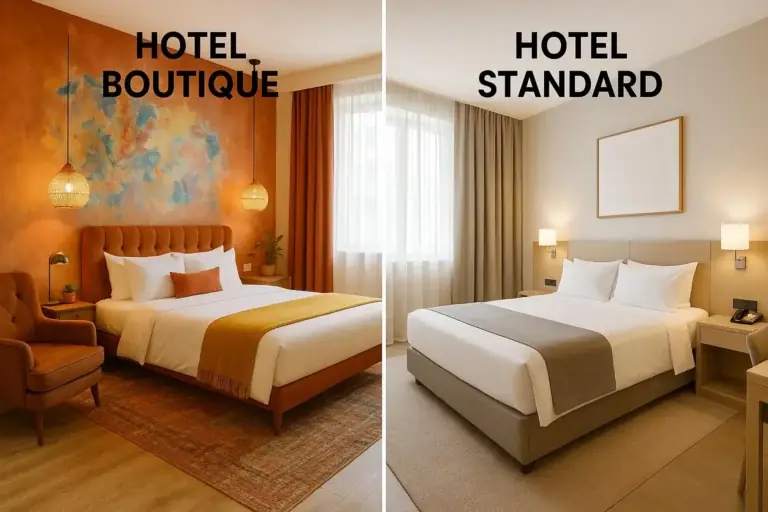
Despite this sector’s expansion, evaluating boutique accommodations remains difficult for consumers, travel advisors, and asset managers alike. The core challenge lies in the term “boutique” itself. Lacking a strict regulatory definition, the label is used indiscriminately across diverse lodging products—from 12-key restored historic manor houses and high-design urban micro-hotels to 150-room soft-branded corporate subsidiaries. When a market conflates disparate operational models under a single marketing umbrella, consumers struggle to assess true value, compare nightly rates accurately, or predict service outcomes.
To effectively compare boutique hotel stay options, one must look past superficial design choices, curated social media presences, and vague promotional copy. A boutique hotel is an integrated operational ecosystem. Its performance depends on the interaction of physical architecture, staff-to-guest ratios, culinary management, acoustic engineering, and revenue distribution systems. A property that excels at providing vibrant social scenes may fail entirely at delivering peaceful, restorative sleep environments. Conversely, an ultra-private rural sanctuary may lack the infrastructure required for seamless remote work.
This reference guide establishes an analytical framework for comparing boutique lodging options across diverse urban, suburban, and rural environments. By evaluating structural variations, operating mechanics, cost dynamics, and failure modes, this analysis enables readers to make informed, risk-adjusted decisions when selecting accommodations.
Understanding “Compare boutique hotel stay options.”
To thoroughly evaluate lodging options, one must recognize that a boutique hotel stay is not a standardized commodity purchase. Instead, it is an investment in a temporary micro-environment. When consumers compare boutique hotel stay options across platforms and markets, they are assessing a complex bundle of spatial, operational, and location-based variables.
Operational Foundations of Boutique Hospitality
-
Inventory and Spatial Scale: True boutique properties generally operate within a restricted room count (typically 10 to 80 keys). This spatial boundary protects public areas from overcrowding, preserves acoustic privacy, and maintains reasonable wait times for services.
-
Service Model Elasticity: Unlike standardized chain hotels bound by rigid corporate scripts, independent boutique service relies on flexible, cross-trained staff capable of tailoring guest interactions to individual preferences.
-
Architectural and Material Provenance: The physical environment prioritizes unique adaptive-reuse structures, bespoke interior joinery, and non-standard floor plans over mass-produced furniture and uniform room modules.
-
Micro-Neighborhood Integration: The property functions as an active node within its immediate surroundings, incorporating local culinary, cultural, and artistic elements directly into its daily operations.
A common point of confusion is assuming that high nightly rates or high-end design automatically indicate operational quality. A property may feature high-end designer furniture in its public lobby while suffering from poor room soundproofing, understaffed front desks, or inadequate hot water infrastructure. Conversely, a modestly styled independent hotel with strong operational routines may deliver superior sleep quality, seamless check-ins, and attentive concierge service.
Oversimplifying the comparison process creates real risks for travelers. Evaluating properties solely by room size or public review scores often hides significant operational trade-offs. For example, a converted historic building in a city center may offer rich architectural character but lack elevator access, central climate control, or adequate luggage storage. A systematic evaluation requires examining the property’s core operational model to determine how well it aligns with specific travel priorities, whether that means high-intensity urban exploration, deep rest and wellness, or remote professional productivity.
Deep Contextual Background
The evolution of boutique hospitality reflects broader historical shifts in urban development, architectural preservation, transit speed, and consumer behavior over the past half-century.
Historical Evolution of Independent Hospitality
-
The Pre-Industrial Inn & Grand Palace Era (Late 19th–Early 20th Century)Lodging originally split into two extremes: small, unstandardized roadside inns offering basic shelter, or grand palace hotels catering exclusively to wealth and nobility. These grand properties relied on formal service protocols, high ceilings, and civic scale, serving as monuments to wealth rather than quiet, personalized retreats.
-
Corporate Standardization and the Franchise Model (1950s–1980s)The expansion of highway networks and commercial aviation spurred the rise of standardized hotel chains. Pioneered by brands like Holiday Inn, Marriott, and Hilton, this era prioritized structural uniformity, predictable room layouts, and centralized reservation systems. These properties eliminated operational surprises for business travelers, but they also created sterile, repetitive interior spaces disconnected from their host communities.
-
The Early Boutique Revolution (1980s–2000s)The modern boutique movement emerged as a direct rejection of corporate standardization. Independent hoteliers converted historic townhouses, disused factories, and mid-century apartment buildings into design-focused hotels. Properties like Anouska Hempel’s Blakes Hotel in London, Ian Schrager’s Morgans in New York, and Bill Kimpton’s West Coast conversions introduced theatrical interior design, vibrant lobby scenes, and anti-corporate hospitality. However, these early iterations often prioritized visual style over functional acoustics, room usability, and operational reliability.
-
Soft Brands, Lifestyle Collections, and Micro-Specialization (2010s–Present)Recognizing the growing demand for authentic accommodations, major corporate hotel conglomerates entered the sector by launching “lifestyle” brands and “soft-brand collections” (e.g., Autograph Collection, Curio Collection, Tribute Portfolio). These platforms allow independent owners to access global distribution and loyalty programs while retaining unique architectural identities. Simultaneously, modern independent boutique hotels have embraced specialized operating models—focusing on advanced environmental controls, clinical wellness infrastructure, micro-neighborhood integration, and high-tech guest services.
Systemic Drivers Shaping Modern Boutique Lodging
Modern boutique hospitality is shaped by three main drivers:
-
Adaptive Reuse and Urban Infill: Developing new-build high-rise hotels in dense city centers requires massive capital investment and long construction timelines. Adaptive reuse—converting historic office buildings, warehouses, or residential structures—allows operators to enter prime locations faster while offering unique architectural spaces.
-
Shift Toward Experiential Value: Consumers increasingly prioritize unique experiences, local culinary connections, and cultural immersion over standardized brand amenities.
-
Advanced Technology Operations: Cloud-based property management systems, digital keyless entry, and mobile communication platforms allow small 20-key properties to operate with high back-of-house efficiency, competing effectively with major corporate reservation platforms.
Conceptual Frameworks and Mental Models
To systematically evaluate and compare boutique hotel stay options, travel managers, asset owners, and guests can use four analytical frameworks.
The Friction-to-Immersion Ratio
The overall quality of a hotel stay depends on how efficiently a property converts available time into meaningful local immersion or restorative rest while minimizing logistical friction.
$$\text{Stay Quality Index} = \frac{\text{Environmental Quality} \times \text{Service Intuition}}{\text{Logistical Friction} + \text{Acoustic Intrusions}}$$
In this model:
-
Environmental Quality: Measures material design, air filtration, lighting spectrums, and bed ergonomics.
-
Service Intuition: Evaluates staff ability to anticipate guest needs without intrusive questioning or rigid script execution.
-
Logistical Friction: Measures administrative delays during check-in, key card failures, slow Wi-Fi, or uncoordinated concierge responses.
-
Acoustic Intrusions: Quantifies unwanted sound spikes from corridors, neighboring rooms, street traffic, or building machinery.
A high-performing boutique hotel lowers the denominator through strong building engineering and streamlined operations, while maximizing the numerator through thoughtful spatial design and attentive service.
The Triad of Spatial Isolation
This framework evaluates how effectively a hotel’s floor plan protects guest privacy and sleep quality across three distinct spatial rings:
-
Private Suite Environment (In-Room Sanctuary)The core recovery zone. Requires double- or triple-glazed acoustic windows, sound-insulated doors, drop-down threshold seals, silent climate control systems, and effective blackout window treatments.
-
Semi-Private Public Amenities (Lobby, Dining, & Lounges)The interior transitional layer. Includes quiet courtyards, residential libraries, and spaced-out dining areas that buffer room corridors from direct street noise.
-
Streetscape & Neighborhood Interface (Exterior Boundary)The ground-floor connection to the city. Features discrete entrances, local cafe integration, and landscaping that insulates the property from traffic and foot congestion.
The Operational Ownership Spectrum
This model categorizes boutique properties based on their underlying management structures, revealing the trade-offs between operational independence and global loyalty systems:
-
True Independents: Fully autonomous properties with custom management, local sourcing, and unique reservation engines. Offer high character and bespoke service, but variable operational standards.
-
Soft-Brand Collections: Independently owned properties connected to corporate reservation engines (e.g., Marriott Autograph, Hyatt Unbound). Combines unique architecture with standardized booking, corporate loyalty perks, and established safety parameters.
-
Boutique Hotel Alliances: Independent properties participating in shared marketing and quality networks (e.g., Small Luxury Hotels of the World, Relais & Châteaux). They deliver strict quality vetting while preserving complete operational autonomy.
Key Categories or Variations
Boutique accommodations vary significantly based on building architecture, geographic setting, target market, and service focus. Comparing options requires matching guest priorities with the strengths of each property type.
1. Urban Historic Conversions
-
Core Focus: Adaptive reuse of historic townhouses, former civic buildings, or merchant mansions in central urban districts.
-
Key Inclusions: Restored architectural details, historic masonry walls, intimate courtyard gardens, and drawing-room libraries.
-
Trade-Offs: Unique room shapes and high character, but potential limitations regarding elevator size, stair steepness, and historic preservation constraints.
2. Adaptive-Reuse Industrial Warehouses
-
Core Focus: Conversion of former textile mills, printing presses, or factories into spacious, design-forward lodgings.
-
Key Inclusions: Soaring ceilings, exposed brick, cast-iron columns, floor-to-ceiling windows, and active rooftop venues.
-
Trade-Offs: Generous room sizes and vibrant social spaces, but potential acoustic echoing in open lobbies and higher ambient noise from rooftop venues.
3. Rural Estates and Agricultural Sanctuaries
-
Core Focus: Low-density retreats set on working vineyards, historic farms, or private nature reserves.
-
Key Inclusions: Farm-to-table culinary programs, expansive natural grounds, private cottage accommodation, and wellness facilities.
-
Trade-Offs: Deep quiet, spatial privacy, and nature access, but higher travel distances, complex arrival logistics, and limited off-property dining.
4. High-Design Urban Micro-Hotels
-
Core Focus: High spatial efficiency in dense urban centers using custom joinery and integrated room technology.
-
Key Inclusions: Built-in platform beds, modular storage, app-controlled lighting and climate systems, and high-performance rain showers.
-
Trade-Offs: Prime urban location at accessible rates, but restricted room square footage and limited space for extended stays or large luggage.
5. Medical and Longevity Wellness Retreats
-
Core Focus: Integrating clinical health diagnostics, longevity therapies, metabolic nutrition, and hydrotherapy into a quiet boutique setting.
-
Key Inclusions: Diagnostic lab testing, custom dietary programs, continuous glucose monitoring, cold plunge circuits, and hyperbaric oxygen chambers.
-
Trade-Offs: High biological recovery and health insights, but strict daily schedules, clinical room aesthetics, and premium price points.
6. Residential Serviced Aparthotels
-
Core Focus: Blending apartment layouts—including full kitchens and living spaces—with boutique hotel services like daily housekeeping and front-desk security.
-
Key Inclusions: In-suite laundry, full kitchen infrastructure, multi-bedroom configurations, and high self-sufficiency.
-
Trade-Offs: Excellent square footage and home-like comfort, but limited communal hotel amenities (e.g., no full-service spa or 24/7 room service).
| Category | Primary Operational Advantage | Main Trade-Off | Ideal Travel Profile |
| Urban Historic Conversion | High architectural character; thick acoustic masonry walls. | Non-standard room shapes; historic limits on elevators. | Culture-focused travelers; romantic weekend getaways. |
| Industrial Warehouse | High ceilings; generous square footage; vibrant social scenes. | Ambient noise echoing in open public lounges. | Design enthusiasts; group trips; creative business travel. |
| Rural Estate Sanctuary | Deep acoustic quiet; farm dining; high spatial privacy. | Remote locations; high transit times; limited dining variety. | Rest and recovery; long leisure breaks; wellness. |
| Urban Micro-Hotel | Prime city-center location; efficient technology; lower rates. | Compact floor area; minimal storage space. | Solo travelers; high-intensity city trips (48–72 hours). |
| Longevity Wellness Retreat | Biomarker optimization; scientific health programs. | Highly structured schedules; premium overall costs. | Preventive health breaks; stress recovery; physical resets. |
| Residential Aparthotel | Full kitchen infrastructure; spacious multi-room layouts. | Reduced front-desk presence; minimal shared amenities. | Extended stays; family travel; remote workers. |
Detailed Real-World Scenarios
Selecting the right boutique hotel requires analyzing specific travel constraints, itinerary demands, and potential operational failure modes.
The High-Stakes Business Trip in a Peak City Market
-
Context: A senior corporate executive attends 3 days of negotiations in London during a major citywide conference. City hotel occupancy exceeds 95%.
-
Option 1: A 150-room corporate chain hotel near the financial district.
-
Option 2: A 30-room urban historic boutique hotel in a quiet nearby neighborhood.
-
Selection: Option 2 (Urban Historic Boutique).
-
Operational Rationale: Large corporate hotels during peak capacity suffer from long elevator delays, crowded breakfast queues, and slow front-desk service. The 30-room boutique property protects the executive’s morning schedule with fast in-lounge check-in, quiet breakfast space, and reliable front-desk support.
-
Failure Mode Avoided: Overbooking risks and elevator bottlenecks common in high-density corporate towers during major conferences.
Executive Burnout and Nervous System Reset
-
Context: A professional recovering from prolonged corporate stress seeks a 7-day stay to restore sleep architecture and lower cortisol levels.
-
Option 1: A vibrant, high-design boutique hotel in a trendy coastal resort town.
-
Option 2: A dedicated 20-key rural wellness estate with structured sleep and thermal hydrotherapy programs.
-
Selection: Option 2 (Rural Wellness Estate).
-
Operational Rationale: Option 1 features active rooftop bars, loud pool music, and social crowding that stimulate the sympathetic nervous system. Option 2 provides complete acoustic quiet, dark sleep environments, adaptogenic dining, and structured physical recovery.
-
Failure Mode Avoided: High ambient noise and social disruption that prevent parasympathetic nervous system recovery.
Multi-Generational Family Cultural Getaway
-
Context: A family traveling with two young children and grandparents plans a 5-night cultural trip to Kyoto.
-
Option 1: Two standard connecting rooms in a boutique hotel with narrow corridors and small rooms.
-
Option 2: A multi-bedroom residential aparthotel set in a restored historic Machiya neighborhood.
-
Selection: Option 2 (Residential Aparthotel).
-
Operational Rationale: Connecting standard rooms lack shared living space and kitchen facilities needed for young children. Option 2 provides a private kitchen for flexible meal prep, separate sleeping zones for contrasting sleep schedules, and a comfortable living area for family time.
-
Failure Mode Avoided: Spatial crowding, bedtime friction, and high dining expenses associated with standard room arrangements.
Planning, Cost, and Resource Dynamics
Comparing boutique hotel options requires evaluating both direct room charges and indirect expenses, such as amenity fees, dining costs, and transit times.
Financial Breakdown of Boutique Accommodation Models
-
Base Suite / Room Rate: $200 – $1,500+ per night depending on market tier.
-
Mandatory Facility / Resort Fees: $0 – $75 per night added at check-in.
-
Breakfast & Coffee Expenses: Included or $25 – $50 per person/day if extra.
-
Valet Parking & Transit Logistics: $30 – $90 per 24 hours in dense urban centers.
-
Direct Booking Perks & Credits: -$25 – -$100 net value (room upgrades, property credits).
Critical Economic Dynamics
-
The Walkability Dividend: A boutique hotel priced $50 higher per night in a highly walkable micro-neighborhood often proves cheaper overall than a lower-cost property on the city outskirts. Eliminating multiple daily taxi rides, ride-share surge pricing, and transit fares offsets the higher base room rate while saving hours of transit time.
-
Direct Booking Value vs. OTA Aggregation: While third-party online travel agencies (OTAs) offer convenient rate comparisons, booking directly with an independent boutique hotel frequently unlocks non-rate benefits. Direct bookers receive higher priority for room upgrades, early check-in, late check-out, and complimentary breakfasts or welcome perks.
-
The Total Cost of Inclusions: Standard hotels often charge separately for Wi-Fi, bottled water, gym access, and coffee. Premium boutique properties frequently bundle these amenities into the baseline room rate, providing complimentary espresso bars, stocked mini-bars, and bike rentals.
Tools, Strategies, and Support Systems
Systematically evaluating boutique lodging requires using specific digital tools, verification routines, and communication strategies.
-
Acoustic and Location Auditing: Use satellite maps and street-level imagery to inspect a property’s immediate surroundings. Check for nearby late-night bars, bus corridors, train lines, or active construction sites that could disrupt sleep.
-
Direct Concierge Pre-Arrival Outreach: Contact the hotel’s front desk 42 to 72 hours before arrival via phone or email. Communicating specific room preferences (e.g., “high floor,” “courtyard facing,” “away from elevator shafts”) significantly increases the likelihood of securing a quiet, well-placed room.
-
Independent Collection Vetting: Use curated boutique alliance platforms (e.g., Design Hotels, Small Luxury Hotels of the World, Relais & Châteaux) to discover vetted properties that maintain strict quality standards for design, building safety, and service.
-
Reservation Transfer Verification: When booking through third-party platforms, send a brief message directly to the hotel 48 hours prior to arrival to verify that your reservation details, room category, and special requests have synced correctly into their property management system.
-
Isochrone Walkability Mapping: Use mapping tools to analyze walking distances from the hotel lobby to key cultural sites, coffee shops, and public transit hubs before committing to a reservation.
Risk Landscape and Failure Modes
Boutique hotel stays carry distinct operational risks. Because independent properties operate with small room counts and custom floor plans, building or service failures can significantly impact a stay.
Failure Mode Taxonomy in Boutique Hospitality
-
The Acoustic Deficit (Structural Sound Transmission): A historic building conversion that preserved original timber floorboards or single-glazed windows without adding adequate interior soundproofing. Guests suffer from street noise, plumbing sounds, and footsteps from rooms overhead, causing severe sleep disruption.
-
The “Design Over Usability” Flaw: Rooms designed for visual appeal that fail basic functional tests—such as open glass bathrooms with zero acoustic privacy, a lack of clothing storage, insufficient electrical outlets near the bed, or dim lighting that prevents reading or working.
-
Elevator and Vertical Transit Bottlenecks: A historic building converted into a multi-story hotel operating with a single, small elevator. During peak check-out and breakfast hours, guests experience long wait times to move between floors.
-
The Intermediary Booking Disconnect: A third-party reservation fails to transfer properly into the hotel’s native property management system. The guest arrives on-site with a confirmed third-party voucher, but the hotel has no record of the reservation and no remaining room inventory.
-
Nightlife Venue Interference: A boutique hotel featuring an active ground-floor restaurant or rooftop cocktail lounge where noise, bass vibrations, and crowded elevator traffic spill into guest room corridors, preventing sleep before early morning hours.
Governance, Maintenance, and Long-Term Adaptation
Maintaining high service standards in boutique hospitality requires continuous building maintenance, staff training, and operational reviews.
Property Quality Checklist
-
Acoustic Soundproofing: Are guest rooms equipped with double- or triple-glazed windows? Do interior doors feature drop-down threshold seals to block corridor noise? Is climate control equipment quiet during night operation?
-
Spatial Ergonomics: Does the room offer adequate floor space to open suitcases without blocking walkways? Is there a functional desk or table with accessible power outlets?
-
Service Responsiveness: Can the front desk process check-in and check-out within 3 minutes? Is concierge staff knowledgeable about current local neighborhood dynamics?
-
Microclimate Control: Does the HVAC system allow precise temperature adjustments without generating excessive fan noise or drafts?
Measurement, Tracking, and Evaluation
Assessing whether a boutique hotel stay delivered genuine value requires evaluating both quantitative financial metrics and qualitative experience indicators.
Key Evaluation Metrics
-
Effective Nightly Rate (ENR): Total net cost divided by nights stayed, accounting for included amenities (breakfast, parking, credits) minus ancillary fees.
$$\text{ENR} = \frac{\text{Total Charges} – \text{Monetized Inclusions Value}}{\text{Nights Stayed}}$$
-
Sleep Quality Index (Biometric or Subjective): Tracking undisturbed sleep hours and evaluating room acoustic insulation, blackout effectiveness, and bed comfort.
-
Transit Time Efficiency: Measuring the percentage of daily trip time spent actively exploring or relaxing versus time lost commuting from peripheral hotel locations.
-
Friction Resolution Speed: The time required by hotel staff to resolve an operational issue (e.g., room change, plumbing repair, billing adjustment).
Common Misconceptions and Oversimplifications
When evaluating boutique hotel options, several persistent myths can lead to poor booking decisions:
-
Myth 1: “Large corporate chain hotels are always more reliable than independent boutique properties.”Correction: While corporate chains offer uniform room modules, they often suffer from long service lines, crowded public areas, and impersonal locations. High-performing boutique properties maintain rigorous service standards while delivering superior neighborhood access, architectural character, and personalized care.
-
Myth 2: “A higher nightly room rate always guarantees better sleep quality and service.”
Correction: High room rates often reflect prime real estate, designer furniture, or expensive lobby finishes rather than structural soundproofing, quality bed engineering, or thorough staff training. -
Myth 3: “Boutique hotels lack modern technological infrastructure.”Correction: Contemporary boutique properties routinely feature advanced technology—including high-speed fiber Wi-Fi, app-controlled lighting and climate systems, keyless mobile entry, and modern audiovisual equipment.
-
Myth 4: “Online travel agency review scores tell the whole story.”Correction: Aggregated online review scores reflect subjective expectations across diverse guest profiles. A property rated highly for its vibrant rooftop bar scene may prove unacceptably loud for a traveler seeking quiet sleep.
Ethical, Practical, or Contextual Considerations
The expansion of the boutique hotel sector carries important economic, architectural, and community responsibilities:
-
Architectural Preservation: Boutique developments support historic preservation by converting historic townhouses, industrial warehouses, and civic buildings into economically viable uses without destroying their structural heritage.
-
Local Economic Retention: Independent boutique hotels retain a higher percentage of guest spend within the local economy compared to multinational chain brands. They source food and beverages from local suppliers, showcase regional artisans, and hire local guides.
-
Community Integration: Boutique operators must manage their properties responsibly to avoid disturbing residents—controlling nighttime noise, managing delivery schedules, and respecting neighborhood norms to maintain a healthy balance between tourism and local life.
Conclusion
Systematically comparing boutique hotel stay options requires looking beyond marketing copy and designer furniture to analyze a property’s operational mechanics, architectural soundproofing, spatial layout, and location value. A successful stay depends on matching guest requirements to a property model’s operational strengths.
By evaluating accommodations through the lenses of spatial efficiency, acoustic insulation, service intuition, and overall acquisition costs, travelers, travel managers, and asset owners can select boutique properties that deliver exceptional value, deep rest, and authentic connections to their destinations.