Luxury Mountain Boutique Hotel Destinations USA: Guide
The alpine and sub-alpine terrain defining American mountain regions operates under demanding environmental, structural, and economic constraints. Urban hotels capitalize on density. Sprawling resorts rely on ski lifts. Elite mountain retreats derive their viability from architectural resilience, topographical isolation, and spatial planning. High-elevation properties face severe structural demands across ranges like the Sierra Nevada, Tetons, Blue Ridge, and Rocky Mountains. Heavy snow loads, barometric shifts, sub-zero thermal gradients, and utility logistics govern design and hotel operations.
Evaluating these properties requires stripping away polished marketing imagery, rustic narratives, and travel awards. A hotel’s true capability depends on technical foundations. How does its framing handle multi-ton snow accumulation? Does its HVAC architecture maintain air quality across temperature swings? How does its supply chain withstand winter closures? Can its financial model navigate seasonal volatility? With only twelve to fifty rooms, any mechanical failure, utility outage, or miscalculation impacts guests immediately and threatens profitability.
Understanding these structural mechanics is essential for asset managers, analysts, travel directors, and discerning travelers. What appears as effortless serenity conceals complex engineering feats, zoning covenants, high staff ratios, and long reservation lead times. Examining the dimensions of luxury mountain boutique hotel destinations USA provides a framework for navigating premier high-elevation properties.
Understanding “luxury mountain boutique hotel destinations USA.”
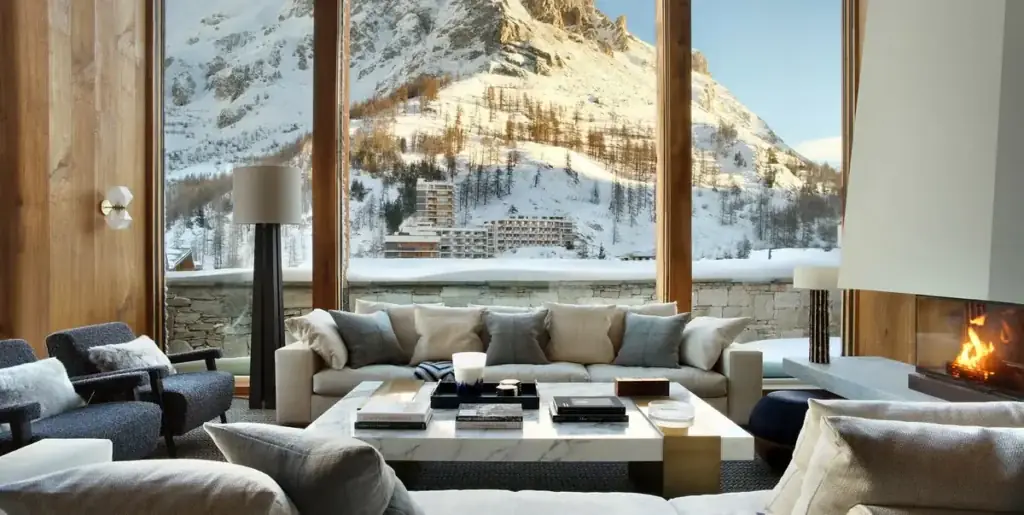
Evaluating luxury mountain boutique hotel destinations USA requires separating rustic styling from measurable architectural and operational performance. Mainstream travel journalism assigns the boutique label to any property with timber beams, stone fireplaces, or plaid textiles. From an engineering perspective, a true luxury mountain boutique hotel meets four criteria. First, it has a low key count between 10 and 55 rooms. Second, it uses climate-responsive architecture with thermal envelopes and snow-shedding roofs. Third, it maintains high staff-to-guest ratios for remote service delivery. Fourth, it integrates strictly with alpine watersheds and wildlife corridors.
Core Structural Audit Layers
Systematically auditing high-elevation boutique performance requires analyzing three core structural layers:
-
Thermal Envelope and Snow-Load Engineering: Use heavy timber framing, structural insulated panels, or triple-glazed glass to withstand extreme wind and snow loads.
-
Micro-Logistics and Utility Redundancy: Assess how properties manage backup power, water storage, wastewater treatment, and snow removal in remote mountain passes.
-
Topographical and Acoustic Provenance: Examine whether properties use natural rock outcrops, forest buffers, and setback distances to isolate suites from noise and traffic.
Common Procurement Oversights
A common mistake in mountain travel procurement assumes high rates and valley zip codes guarantee quietude. A ski-corridor property can experience severe snowcat noise, delivery trucks, and foot traffic directly outside guest windows. Conversely, a property tucked into a secondary sub-alpine canyon with dedicated setback buffers delivers absolute acoustic and visual seclusion.
Assessing the domestic mountain sector requires looking beneath interior styling to examine building physics and engineering safeguards.
Deep Contextual Background: From Railway Grand Lodges to Modern Alpine Sanctuaries
American mountain hospitality evolved through distinct transportation, industrial, and cultural phases over a century and a half. In the late nineteenth and early twentieth centuries, transcontinental railroad companies constructed massive grand lodges at strategic scenic vistas. These stone-and-timber structures symbolized industrial triumph, offering standardized luxury and establishing the vernacular aesthetic of heavy framing.
During the mid-twentieth century, the post-war ski boom transformed sleepy mining towns like Aspen into international resort enclaves. Initially dominated by European-style alpine chalets and standardized motor inns, the mountain lodging sector gradually polarized. Corporations developed sprawling monoliths to maximize bed counts, while independent hoteliers pioneered a counter-movement focused on intimate scale and craftsmanship.
Rising demand for low-density wilderness immersion has accelerated the development of secluded mountain retreats beyond traditional resort hubs. Properties like The Ranch at Rock Creek achieved high performance by pairing isolation with refined architecture. Identifying premier properties requires navigating a diverse ecosystem of historic mining compounds, alpine pavilions, and secluded forest ranches.
Conceptual Frameworks and Mental Models for Mountain Boutique Evaluation
Objective comparison of premier mountain boutique properties requires analytical models that isolate thermal resilience, spatial privacy, and operational logistics.
1. The Altitude-to-Isolation Ratio (AIR)
This framework measures elevation relative to the travel time needed to reach emergency care, airports, and supply nodes. High-AIR properties offer wilderness immersion but require internal medical protocols and robust provisioning during weather disruptions.
2. The Thermal Envelope Integrity Index (TEII)
This model evaluates how an architectural envelope manages sub-zero temperatures, wind loads, and snow accumulation. High-TEII properties use advanced insulation, thermal-break framing, and radiant floor heating to maintain comfort and prevent ice dams.
3. The Seasonal Volatility Index (SVI)
This model calculates revenue strain caused by occupancy fluctuations between peak seasons and deep shoulder periods. Resilient properties deploy targeted programming, flexible staffing, and diversified guest strategies to maintain profitability throughout the year.
Key Categories and Structural Variations in Alpine Hospitality
Premier small-scale mountain properties fall into distinct regional and operational archetypes, each balancing climate management, key count, and pricing models differently.
| Mountain Boutique Archetype | Typical Key Count | Architectural & Environmental Profile | Revenue & Pricing Model | Primary Operational Trade-Off / Vulnerability |
| High-Altitude Ski-In/Ski-Out Boutiques | 20 – 50 keys | Timber-and-stone construction, direct slope access, ski valets | Ultra-high winter ADR + mandatory resort or amenity fees | High winter wear and tear; intense seasonal staffing pressure |
| Isolated Wilderness Timber Lodges | 12 – 30 keys | Hand-hewn log cabins, vast private acreage, fly-fishing/riding | All-inclusive luxury tariffs (meals and core guiding included) | Long gravel access roads; strict weather vulnerability |
| Historic Mining Town Restorations | 15 – 45 keys | Victorian brick facades, modernized interiors, walkable core | High European Plan ADR + destination dining and bar revenues | Street noise exposure; strict historic preservation zoning limits |
| Sub-Alpine Forest & Ridge Retreats | 25 – 60 keys | Modernist glass, steel, and cedar pavilions integrated into ridges | High seasonal ADR + spa and wellness program packaging | High wildfire defensible-space maintenance costs |
| Appalachian & Eastern Ridge Escapes | 18 – 40 keys | Stone-and-shingle architecture, rolling hardwood forest settings | Moderate-to-high ADR + farm-to-table culinary focus | Shorter peak seasons (autumn foliage and summer hiking) |
| Independent Aesthetic Motor Lodge Conversions | 25 – 65 keys | Retro-design motels, central fire pits, minimalist mountain styling | Dynamic BAR pricing + vibrant beverage programming | Higher foot traffic; lower interior square footage per key |
Realistic Decision Logic for Property Selection
When selecting among premier properties within luxury mountain boutique hotel destinations, USA travelers must evaluate operational models against specific personal objectives:
-
Prioritizing Direct Slope Access & Winter Sports Efficiency: Select high-altitude boutique lodges in Jackson Hole, Aspen, or Telluride where ski valets and immediate lift connectivity eliminate morning transit friction.
-
Seeking Absolute Wilderness Seclusion & All-Inclusive Guiding: Choose isolated timber ranches in Montana or Wyoming where private acreage, fly-fishing, and equestrian programs operate without public crowds.
-
Targeting Historic Walkability & Cultural Dining: Deploy restored Victorian boutique hotels in mountain mining towns, balancing historic architectural character with vibrant local restaurant scenes.
Detailed Real-World Realities and Operational Stress Testing
Examining how mountain boutique stays behave under real-world operational stress exposes vulnerabilities unique to high-elevation hospitality.
The Multi-Day Winter Pass Closure and Supply Chain Isolation
-
Constraints: Travelers book a four-night winter stay at a remote mountain lodge accessible via a single high-altitude mountain pass.
-
Decision Points: Monitoring state department of transportation road advisories versus attempting tight travel schedules during active winter storm warnings.
-
Failure Modes: Heavy avalanche control operations and whiteout conditions close the pass for 48 hours, trapping incoming guests and delaying food and linen deliveries.
-
Second-Order Effects: While secure on-site, guests experience modified dining menus due to delayed provisioning, highlighting the necessity of deep on-property pantry reserves and robust emergency generator systems.
The Shoulder-Season Utility Maintenance and Mud-Season Shutdown
-
Constraints: A traveler attempts to book a boutique mountain retreat during the transitional “mud season” in April or November.
-
Decision Points: Selecting properties that remain fully operational versus those utilizing the shoulder window for essential annual maintenance.
-
Failure Modes: Many boutique properties close entirely for six to eight weeks to execute deep maintenance, while surrounding local restaurants and trails remain shuttered or impassable due to melting snow and mud.
-
Second-Order Effects: Uninformed travelers encounter a ghost town with limited dining options and closed hotel amenities, reinforcing the importance of verifying operational calendars.
Wildfire Smoke Infiltration and Air Quality Surges in Summer
-
Constraints: Guests reserve a high-design mountain ridge retreat in August, anticipating pristine alpine air and outdoor dining.
-
Decision Points: Evaluating a property’s indoor air filtration infrastructure and wildfire mitigation readiness.
-
Failure Modes: Regional wildfires create dense smoke inversions trapped in mountain valleys, driving Air Quality Index (AQI) levels into hazardous zones.
-
Second-Order Effects: Outdoor patio dining and guided hiking programs are cancelled, forcing guests indoors and testing the property’s advanced HVAC air-scrubbing capabilities.
Planning, Cost, and Resource Dynamics
Evaluating expenditure across elite mountain properties requires accounting for weather-driven operational costs, specialized winter maintenance, and seasonal rate volatility.
Direct vs. Indirect Cost Architecture
Mountain properties face unique cost structures, including continuous snow removal, high heating energy consumption, specialized insurance premiums for winter sports and remote locations, and retention bonuses to secure skilled hospitality staff in high-cost resort towns. Direct costs cover suite tariffs and bundled meal plans. Indirect costs frequently include mandatory daily resort fees ($40 to $100 per night), private 4×4 airport transfer fees ($250 to $750), and specialized backcountry guiding outlays.
| Cost Component | High-Altitude Ski Boutique | Isolated Wilderness Timber Lodge | Historic Mountain Town Hotel |
| Base Suite / Cabin Rate (Per Night) | $800 – $2,500 | $1,800 – $4,500 (All-inclusive) | $450 – $1,200 |
| Mandatory Resort / Amenity Fees | $50 – $100 / night + tax | Included in tariff | $30 – $60 / night + tax |
| Private Mountain Transfers | $200 – $600 round-trip SUV | $400 – $1,000 regional transfer | Rental car or rideshare |
| On-Property Dining & Beverage | $200 – $400 /couple/dayy | Built-in (Beverage extras apply) | $150 – $350 / couple/day |
| Estimated 3-Night Couple Outlay | $3,100 – $9,300 | $6,200 – $15,500 | $1,800 – $4,800 |
Tools, Strategies, and Support Systems
Navigating premier mountain properties requires leveraging specialized tools and verification workflows to ensure optimal weather resilience and logistical ease.
-
Luxury Travel Advisor Preferred Partner Channels
-
Utility: Booking affiliated mountain retreats (such as Aman, Auberge Resorts Collection, or Relais & Châteaux properties) through accredited luxury consortia secures daily breakfast, $100 property credits, and priority suite placement.
-
Limits: Upgrade availability is severely constrained at 15- to 40-key properties during peak ski and foliage windows.
-
-
Real-Time Mountain Pass & Weather Routing Apps
-
Utility: Utilizing state department of transportation transit apps and meteorological radar monitors pre-arrival ensures travelers anticipate pass closures, chain laws, and winter storms.
-
Limits: Sudden high-altitude microbursts and avalanches can bypass predictive models.
-
-
Direct Engineering & HVAC Infrastructure Inquiries
-
Utility: Contacting on-site management to verify that guest accommodations feature radiant floor heating, humidity control, and high-efficiency HEPA air filtration ensures physical comfort during extreme weather.
-
Limits: Properties rarely disclose granular mechanical specs through front-desk reservations teams.
-
-
Satellite Topography & Setback Verification
-
Utility: Inspecting satellite imagery confirms whether a mountain lodge sits in a private forested alcove or immediately adjacent to noisy highway snow corridors and ski lift machinery.
-
Limits: Satellite views cannot capture interior acoustic insulation or localized noise bleed.
-
-
Shoulder-Season & Mid-Week Booking Shifts
-
Utility: Shifting stays to early December, April, or mid-week autumn dates reduces nightly tariffs significantly while bypassing overcrowded holiday lifts and trails.
-
Limits: Certain outdoor adventure amenities and fine-dining venues may operate on reduced schedules.
-
-
Comprehensive Weather-Interruption & Evacuation Insurance
-
Utility: Pairing bookings with travel insurance protects non-refundable deposits against unexpected regional road closures, severe storms, or medical evacuations.
-
Limits: Standard policies require verified meteorological triggers rather than casual travel hesitation.
-
Risk Landscape, Failure Modes, and Compounding Disruption
High-elevation boutique hospitality carries distinct environmental, infrastructural, and operational risks that frequently compound during extreme weather events.
Taxonomy of Mountain Boutique Risk Factors
-
Grid & Utility Instability: Extended power outages during heavy winter blizzards test heavy-duty diesel generator redundancy and fuel reserves.
-
Extreme Structural Snow Loading: Rapid freeze-thaw cycles causing ice dams, roof leaks, and structural stress on historic or timber-framed buildings.
-
Avalanche & Rockfall Interruption: Seasonal geological hazards closing access roads and threatening remote backcountry properties.
-
Labor Retention & Housing Constraints: Severe housing shortages in resort towns making it difficult to house skilled hospitality staff, impacting service ratios.
Compounding failure cascades typically unfold when a remote mountain lodge experiences a grid power failure during a sub-zero blizzard, forcing reliance on backup generators while heavy snow accumulation blocks fuel delivery trucks from reaching the property.
Governance, Maintenance, and Long-Term Adaptation
Protecting physical assets and ensuring uninterrupted guest comfort in harsh alpine environments requires executing disciplined maintenance and monitoring protocols.
Mountain Property Maintenance Checklist
Execute these operational reviews quarterly to mitigate environmental wear and utility strain:
-
Roof Snow-Load & Ice-Dam Inspection: Inspect heat cables, roof drainage channels, and structural timber joints before winter freeze events.
-
Generator & Fuel Supply Verification: Test automatic transfer switches, verify diesel storage capacity, and secure secondary heating fuel reserves.
-
Wildfire Defensible Space Clearing: Maintain mandatory clearance perimeters around forest-adjacent structures before the summer fire season.
-
Emergency Medical & Oxygen Systems Check: Restock supplemental oxygen canisters, verify satellite communication links, and review emergency evacuation protocols with staff.
Measurement, Tracking, and Evaluation Frameworks
Assessing the true performance and sustainability of a mountain boutique property requires tracking both quantitative efficiency metrics and qualitative guest signals.
Quantitative vs. Qualitative Evaluation Matrix
-
Quantitative Metrics: Altitude-to-Isolation Ratio (AIR), Thermal Envelope Efficiency, Seasonal Volatility Index (SVI), and True Net Stay Cost Variance.
-
Qualitative Signals: Indoor Acoustic Calm, Thermal Stability Across Blizzard Conditions, Wilderness Integration, and Anticipatory Staff Responsiveness.
-
Leading vs. Lagging Indicators: High TEII scores, robust utility redundancy, and confirmed road-monitoring protocols serve as leading indicators of a superior stay. Uninterrupted sleep, balanced indoor temperatures, and effortless outdoor enjoyment represent lagging indicators of true property excellence.
Common Misconceptions and Oversimplifications
Mainstream travel media frequently perpetuates oversimplifications regarding mountain destinations that lead to misaligned expectations and booking errors.
- Myth 1: “All Mountain Boutique Hotels Provide Immediate Ski-In/Ski-Out Access”
-
Correction: Many elite wilderness lodges and historic town hotels sit miles away from ski slopes, prioritizing quietude, fly-fishing, or cultural access over slope-side convenience.
- Myth 2: “Historic Mountain Buildings Offer Superior Modern Comfort”
-
Correction: While charming, historic 19th-century mining buildings often feature lower ceilings, lack modern soundproofing, and present layout constraints compared to purpose-built contemporary alpine suites.
- Myth 3: “Summer in the Mountains Is Always Mild and Smoke-Free”
-
Correction: Climate shifts have made western summers prone to regional wildfire smoke inversions and high daytime UV exposure, requiring advanced indoor air filtration.
- Myth 4: “Small Boutique Hotels Have Lower Overhead Than Large Resorts”
-
Correction: High staff-to-guest ratios, remote logistics, intense winter maintenance, and short operating seasons drive up per-key operational overhead significantly.
- Myth 5: “Booking Through Third-Party OTAs Secures Identical Room Assignments”
-
Correction: Boutique mountain hotels reserve their premier valley-view or corner fireplaces for direct bookers and luxury consortia advisors, routing third-party users to parking-lot-facing rooms.
- Myth 6: “Mountain Weather Forecasting Eliminates Travel Surprises”
-
Correction: Microclimate variations in high-elevation passes can generate localized blizzards and rapid wind shifts that defy regional forecasts.
Ethical, Practical, and Contextual Considerations
Operating low-density luxury hospitality across fragile alpine ecosystems carries profound environmental and community responsibilities. Sustainable mountain operators invest heavily in watershed protection, renewable energy integration, wildlife migration corridor preservation, and strict dark-sky lighting ordinances that protect nocturnal wildlife. Furthermore, addressing the severe workforce housing crisis in American mountain resort towns is essential to ensure local communities remain vibrant and sustainable.
Booking directly or through accredited luxury travel advisors ensures that revenues support local staff housing, environmental conservation initiatives, and authentic regional artisans rather than leaking to third-party commissions.
Conclusion
Evaluating options among luxury mountain boutique hotel destinations in the USA requires looking past curated photographic styling, rustic hearth marketing, and generalized lifestyle branding. Achieving genuine comfort, architectural authenticity, thermal stability, and financial predictability demands an analytical approach grounded in evaluating thermal envelope integrity, micro-logistics resilience, altitude isolation, and all-in cost structures.
In final synthesis, navigating the luxury mountain boutique hotel destinations USA market demands a rigorous commitment to operational realism. By combining climate-aware scheduling with physical envelope verification and direct booking relationships, travelers and hospitality analysts can ensure that a stay across America’s most arresting high-elevation landscapes delivers enduring quietude, architectural craft, and profound connection.