American Luxury Boutique Hotel Retreats: Definitive Guide
The high-end independent hospitality sector operates at the intersection of low-density lodging, non-standardized architecture, and bespoke service. It faces severe environmental, structural, and economic pressures. Unlike massive convention towers that amortize fixed overhead across hundreds of standardized rooms, elite independent retreats derive viability from architectural provenance, localized culture, and service velocity. From converted nineteenth-century warehouses in Manhattan to historic maritime estates on Cape Cod, these properties represent an asset class where every variable behaves differently than chain hospitality.
Evaluating these small-footprint luxury properties requires stripping away polished lifestyle photography and subjective travel awards. A boutique property’s true capability depends on foundational asset management. How do structural envelopes withstand climate extremes? Does off-grid utility infrastructure comply with environmental protections? How do supply chains handle remote regional logistics, and how do financial models navigate seasonal occupancy volatility? When key counts range from twelve to sixty rooms, a single infrastructure failure or acoustic disparity impacts the guest experience immediately and threatens profitability.
Understanding these mechanics is essential for hospitality asset managers, real estate analysts, and discerning travelers seeking psychological decompression. What appears on booking portals as effortless serenity conceals complex engineering feats, coastal preservation covenants, high staff-to-guest ratios, and long reservation lead times. Examining these dimensions provides a rigorous framework for navigating premier independent properties across North America.
Understanding “American luxury boutique hotel retreats.”
Evaluating American luxury boutique hotel retreats requires separating superficial styling from measurable performance. Mainstream travel journalism routinely assigns the boutique label to any property featuring exposed brick walls, velvet upholstery, or fewer than 150 rooms. From an engineering perspective, however, a true luxury boutique retreat is defined by four structural criteria. First, it maintains a low key count, typically between 10 and 65 accommodations. Second, it features site-specific architecture rooted in historic adaptive reuse or local topography. Third, it employs high staff-to-guest ratios for discretionary service. Fourth, it utilizes strategic spatial buffering that insulates guests from external noise.
Core Structural Audit Layers
Systematically auditing elite independent boutique performance requires analyzing three core structural layers:
-
Acoustic Insulation and Structural Envelope Engineering: Building envelopes should utilize laminated acoustic glazing, floating floor assemblies, and isolated masonry walls. These elements eliminate urban noise and transit vibrations without compromising historic facades.
-
Key Density and Acreage Buffering: Assess the ratio of guest accommodations to total property acreage. Standalone cottages and cliffside pavilions provide genuine acoustic and visual privacy rather than compressed courtyard proximity.
-
Ownership Governance and Distribution Control: Determine whether the property operates as a fiercely independent estate, belongs to a curated alliance like Relais & Châteaux, or functions inside an ultra-luxury soft brand like Aman or Auberge Resorts Collection.
Common Procurement Oversights
A pervasive mistake in luxury travel procurement is assuming that high nightly rates guarantee quietude and structural comfort. A 35-room property located in a vibrant nightlife district can experience severe late-night street noise and delivery truck vibration despite top-tier room pricing. Conversely, a property tucked into a residential alcove or spread across rural acreage delivers absolute seclusion.
Navigating a comprehensive assessment of the domestic boutique sector requires looking beneath interior design styling. Evaluators must examine building physics, historic zoning safeguards, and total stay cost structures.
Deep Contextual Background: From Grand Railway Hotels to Independent Adaptive Reuse
The architecture of American independent hospitality evolved through distinct industrial and cultural phases over the past century and a half. In the late nineteenth and early twentieth centuries, urban expansion anchored monumental Grand Hotels near central railway terminals and scenic vistas. These towering masonry and timber structures offered standardized luxury to business travelers, establishing lodging as an imposing commercial enterprise.
During the mid-twentieth century, suburbanization and the interstate highway system shifted development toward standardized downtown motor inns and massive convention resorts. By the late 1980s and 1990s, pioneering hoteliers spearheaded a counter-movement in urban centers. Meanwhile, visionary rural developers established remote wilderness sanctuaries like Post Ranch Inn. They recognized that affluent travelers desired design-led, intimate environments reflecting local neighborhood creative energy or raw natural landscapes.
In recent decades, rising demand for regional immersion has accelerated the adaptive reuse of historic urban architecture. Boutique hotel groups have transformed former printing plants, banks, historic ranches, and sea-captain estates into high-design retreats. Today, identifying premier independent properties requires navigating a diverse ecosystem spanning restored brownstones, industrial loft conversions, desert canyon pavilions, and alpine timber lodges.
Conceptual Frameworks and Mental Models for Boutique Retreat Evaluation
Objective comparison of premier independent properties requires analytical models that isolate acoustic resilience, spatial privacy, and operational logistics.
1. The Fixed-Overhead Dilution Ratio (FODR)
Because independent retreats operate with small room inventories, fixed operational costs must be amortized across fewer keys than in a 400-room hotel. High-FODR properties either command ultra-high nightly tariffs ($1,200 to $4,500+) to fund deep staffing benches, or adopt lean service models. Properties caught in the middle, charging mid-tier rates while attempting full-scale amenity breadth, frequently experience service bottlenecks.
2. The Public-to-Resident Permeability Index (PRPI)
This model evaluates how much external foot traffic enters the property via destination restaurants, rooftop bars, or spa passes. Low-PRPI sanctuaries restrict grounds and dining exclusively to registered overnight guests, eliminating strangers from shared spaces. High-PRPI properties supplement room revenue with local dining traffic, trading away total seclusion for culinary vibrancy.
3. The True Net Retreat Cost Metric (TNRCM)
This model calculates the complete financial outlay of an upscale boutique stay. It combines baseline suite tariffs, mandatory resort fees, service charges, overnight valet parking, and localized dining outlays, minus bundled consortia credits.
Key Categories and Structural Variations in Independent Luxury Hospitality
| Independent Retreat Archetype | Typical Key Count | Architectural & Environmental Profile | Revenue & Pricing Model | Primary Operational Trade-Off / Vulnerability |
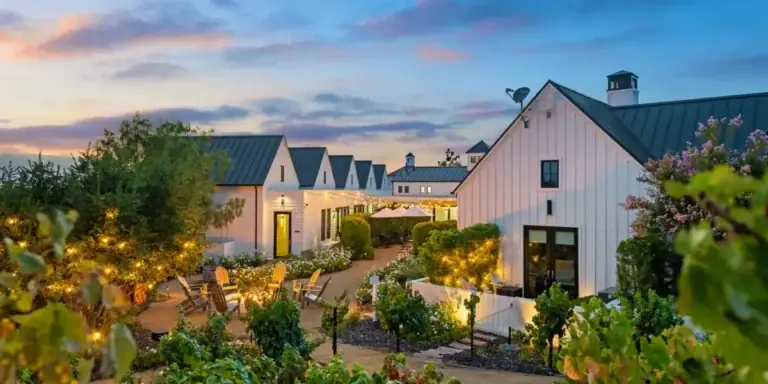
| Ultra-Luxury All-Inclusive Rural Estates | 15 – 45 keys | Sprawling private acreage; standalone cottages & farmhouses | All-inclusive nightly tariff bundling meals, wine & core activities | Ultra-high upfront tariff; strict multi-night minimums and deposit rules |
| Cast-Iron & Industrial Loft Conversions | 25 – 60 keys | Exposed brick, timber beams, soaring ceilings, large iron-framed windows | High BAR pricing + destination cocktail lounge revenue | High street-noise transmission through historic single-pane glass |
| Cliffside Coastal & Redwood Sanctuaries | 20 – 45 keys | Organic redwood, glass & stone cliff suites, outdoor soaking tubs | High ADR + breakfast/wellness inclusions + à la carte fine dining | Cold Pacific surf; Highway 1 landslides; summer morning marine fog |
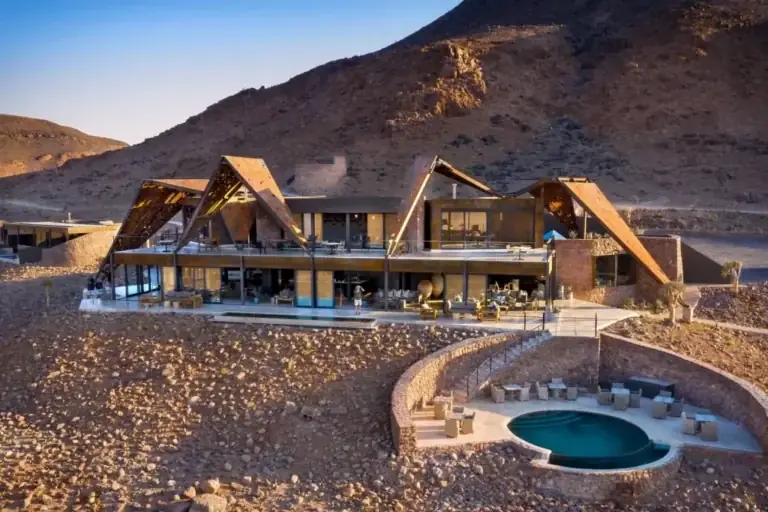
| Desert & Canyonland Minimalist Pavilions | 25 – 45 keys | Low-impact concrete, steel & sandstone suites in arid landscapes | Ultra-luxury ADR or semi-inclusive adventure/wellness packages | Long regional airport transfers; extreme summer afternoon heat |
| Historic Townhouse & Brownstone Inns | 12 – 30 keys | Multi-level historic townhouses, narrow staircases, residential blocks | High nightly ADR + intimate parlor breakfasts | No elevators in strict landmark buildings; compact room footprints |
| Alpine Wilderness Timber Lodges | 12 – 35 keys | Hand-hewn log cabins, vast private acreage, fly-fishing/riding | Seasonal all-inclusive or semi-inclusive expedition tariffs | Remote winter pass closures; complex regional transfers |
Realistic Decision Logic for Property Selection
-
Prioritizing Absolute Privacy & All-Inclusive Ease: Select secluded rural estates in Vermont, Montana, or Tennessee where guest-only access covenants and bundled dining eliminate outside crowds and reservation friction.
-
Seeking Industrial Architectural Provenance & Urban Energy: Choose converted loft and warehouse hotels in design districts like SoHo or Chicago’s West Loop, where soaring ceilings and vibrant dining scenes anchor the stay.
-
Targeting Dramatic Wilderness Landscapes & Stargazing: Deploy minimalist desert pavilions in Utah and Sedona or cliffside redwood suites in Big Sur for architectural immersion inside iconic natural topography.
Detailed Real-World Scenarios and Operational Stress Testing
The Private Wedding Buyout and Common Area Displacement
-
Constraints: Travelers book a milestone weekend anniversary stay at a 30-room wine-country or coastal estate without verifying pre-booked private events.
-
Decision Points: Reserving rooms online without asking the front desk about property buyouts scheduled during those dates.
-
Failure Modes: A private wedding party has contracted the main garden lawn and courtyard bar for weekend receptions, restricting regular guest access.
-
Second-Order Effects: Registered overnight guests are displaced from signature outdoor lounges, illustrating why pre-arrival event checks are vital at small-footprint properties.
Historic Main-House Acoustic Contagion vs. Carriage House Privacy
-
Constraints: Guests book an entry-level room in the restored 19th-century main mansion of a historic urban or coastal boutique inn rather than a detached cottage.
-
Decision Points: Selecting the lead-in room rate to save $150 per night without auditing building construction.
-
Failure Modes: Original hardwood floors and lath-and-plaster walls transmit footstep vibrations from upstairs guests and muffled lobby conversation directly into the room.
-
Second-Order Effects: Morning sleep is interrupted early, whereas booking a detached cottage or top-floor corner room eliminates overhead and hallway noise.
Remote Transfer and Regional Flight Disruption Cascading
-
Constraints: Travelers book a four-night stay at a remote desert or alpine sanctuary requiring a connecting regional flight plus a private SUV transfer.
-
Decision Points: Scheduling tight same-day airline connections versus building an overnight gateway buffer or booking flexible airfare.
-
Failure Modes: A late-afternoon weather delay cancels the sole daily regional flight into a remote desert or mountain airstrip.
-
Second-Order Effects: Because remote sanctuaries enforce strict non-refundable arrival policies within 30 days, losing the first night forfeits substantial accommodation costs unless protected by travel insurance.
Ground-Floor Restaurant and Rooftop Bar Acoustic Spillover
-
Constraints: Guests reserve a room at an acclaimed urban design hotel celebrated for its bustling subterranean jazz bar and high-volume rooftop lounge.
-
Decision Points: Booking standard room categories directly above active hospitality venues without requesting upper-floor residential wings.
-
Failure Modes: Bass frequencies from evening music programming propagate through historic brick party walls and floor joists until 2:00 AM.
-
Second-Order Effects: Friction arises between sleep-seeking guests and property management, illustrating the operational friction inherent in high-PRPI urban properties.
Planning, Cost, and Resource Dynamics
Direct vs. Indirect Cost Architecture
| Cost Component | Urban Loft Conversion | Botanical Foothill Estate | Ultra-Luxury All-Inclusive Sanctuary |
| Base Suite Rate (Per Night) | $550 – $1,400 | $1,800 – $3,800 | $2,600 – $5,500+ (All-inclusive) |
| Mandatory Destination / Resort Fees | $35 – $65 / night + tax | $90 – $150 / night + tax | 20% – 24% service charge + local tax |
| Overnight Valet / Regional Transfers | $55 – $95 / night | $150 – $400 regional transfer | $400 – $1,200 private SUV/charter |
| On-Property Dining & Beverage | $150 – $350 / couple/day | Included or $350–$650 / day | Built into tariff (Rare reserve wines extra) |
| Estimated 3-Night Couple Outlay | $2,300 – $5,900 | $7,400 – $15,800 | $9,800 – $21,000+ |
Tools, Strategies, and Support Systems
-
Luxury Travel Advisor Preferred Partner Channels
-
Utility: Booking affiliated boutique retreats through accredited luxury consortia (Virtuoso, Amex FHR, Relais & Châteaux) secures direct BAR rates alongside daily breakfast, $100 property credits, and priority suite placement.
-
Limits: Upgrade availability is constrained at 15- to 45-key properties where premier suites sell out months in advance.
-
-
Direct Front-Desk Acoustic & Floor-Plan Audits
-
Utility: Contacting the on-site front-desk manager prior to check-in to request courtyard-facing rooms, upper-floor placements, or detached cottages ensures superior acoustic isolation.
-
Limits: Hotels log specific room preferences in their PMS while retaining final operational assignment discretion.
-
-
Satellite Topography & Setback Verification
-
Utility: Inspecting satellite imagery confirms whether an independent retreat sits within a protected natural basin or immediately adjacent to dusty highways, construction sites, or urban transit corridors.
-
Limits: Satellite views cannot capture interior acoustic glazing quality or future municipal construction projects.
-
-
Shoulder-Season & Mid-Week Booking Shifts
-
Utility: Shifting stays to mid-week or shoulder seasons reduces nightly tariffs by 15 to 35 percent while bypassing overcrowded weekend dining rooms and wedding buyouts.
-
Limits: Certain seasonal adventure amenities and fine-dining venues may operate on reduced schedules.
-
-
Comprehensive Weather-Interruption & Evacuation Insurance
-
Utility: Pairing bookings with travel insurance protects non-refundable deposits against unexpected regional road washouts, severe storms, or flight cancellations.
-
Limits: Standard policies require verified meteorological triggers rather than casual travel hesitation.
-
-
Pre-Arrival Bespoke Itinerary & Dietary Profiling
-
Utility: Engaging the property’s dedicated guest-experience concierge 30 to 45 days prior to arrival allows culinary and guiding teams to customize wine pairings, dietary preferences, and private wilderness excursions.
-
Limits: Private backcountry guides and peak sunset spa slots require early locking to guarantee availability.
-
Risk Landscape, Failure Modes, and Compounding Disruption
Taxonomy of Boutique Retreat Risk Factors
-
Key-Person Dependency Risk: Because independent properties rely heavily on individual executive chefs, general managers, or head concierges rather than rigid corporate manuals, key departures can shift property execution.
-
Municipal Utility & Infrastructure Failures: Main water line breaks, electrical grid brownouts, or remote pass closures disrupting immediate hotel access and services.
-
Historic Building Envelope Deterioration: Water intrusion through historic masonry joints, single-pane iron windows, or aging parapets during severe storms.
-
Labor Retention & Housing Constraints: Severe housing shortages in resort towns making it difficult to house skilled hospitality staff, impacting service ratios.
Governance, Maintenance, and Long-Term Adaptation
Independent Property Maintenance Checklist
-
Façade & Structural Envelope Inspection: Check historic brickwork, stone lintels, timber framing, and glass seals for water infiltration and structural settling.
-
Acoustic Seal & Glazing Audit: Test window weatherstripping, acoustic door seals, and vibration-dampening mountings across all guest rooms.
-
Water & Utility System Testing: Verify filtration purity, well pump integrity, generator redundancy, and greywater management performance.
-
Emergency Power & Communication Check: Test automatic transfer switches, verify diesel fuel levels, and secure post-storm clearing equipment.
Measurement, Tracking, and Evaluation Frameworks
Quantitative vs. Qualitative Evaluation Matrix
-
Quantitative Metrics: Fixed-Overhead Dilution Ratio (FODR), Public-to-Resident Permeability Index (PRPI), Staff-to-Key Service Ratio, and True Net Retreat Cost Variance.
-
Qualitative Signals: Acoustic Silence and Sightline Privacy, Culinary Customization and Provenance, Unscripted Staff Anticipatory Care, and Post-Stay Restorative Satisfaction.
-
Leading vs. Lagging Indicators: High acreage-to-room ratios, strict guest-only campus containment, and confirmed transfer buffers serve as leading indicators of a superior stay. Deep uninterrupted sleep, balanced indoor comfort, and zero check-signing friction represent lagging indicators of true property excellence.
Common Misconceptions and Oversimplifications
- Myth 1: “All Small Boutique Hotels Offer Quiet Residential Seclusion”
-
Correction: Many design-forward urban properties sit in vibrant arts or nightlife districts where street noise and music bleed through historic windows unless rigorous acoustic engineering is present.
- Myth 2: “Historic Townhouse Hotels Feature Modern Elevator Access”
-
Correction: Strict historic preservation and landmark zoning laws frequently prohibit the installation of modern elevators in narrow 19th-century townhouses, requiring guests to navigate stairs.
- Myth 3: “Booking Through Third-Party OTAs Secures Identical Room Assignments”
-
Correction: Boutique properties reserve their quiet courtyard-facing or upper-floor rooms for direct bookers and luxury consortia advisors, routing third-party users to lower-floor street-facing rooms.