Top Coastal Boutique Hotel Destinations USA: Definitive Travel Guide
Shoreline hospitality in the United States operates at a demanding intersection of coastal zoning covenants, marine corrosion engineering, seasonal weather shifts, and inventory scarcity. Unlike inland urban hotels on municipal grids or mega-resorts with five hundred rooms, small coastal properties face steep maintenance hurdles. They must balance intimate architectural scale against harsh salt-air wear, strict coastal setbacks, and sharp seasonal demand swings. From rocky granite harbors in Maine and shingle estates on Cape Cod to redwood bluffs in California and coral keys off Florida, premier coastal boutique destinations form a distinct real estate asset class.
Evaluating top coastal destinations requires looking past sunset photography, nautical decor, and lifestyle rankings. True operational viability depends on how shoreline topography shapes water access. It also hinges on whether beaches are private or crowded, how marine fog or hurricanes compress outdoor calendars, and how small inventories handle wedding buyouts. A cliffside retreat in Big Sur delivers dramatic Pacific views with zero swimming access. Conversely, a barrier-island inn in South Carolina or Florida offers warm surf alongside seasonal tropical storm exposure.
Travel directors, analysts, and discerning travelers need clear facts to plan shoreline trips effectively. Promotional brochures often promise an effortless seaside escape. In reality, they conceal coastal highway bottlenecks, unbundled beach-club and parking fees, strict thirty-day cancellation rules, and sharp seasonal rate swings.
This guide establishes an analytical framework for auditing and comparing premier shoreline boutique destinations across the United States. It examines historical shifts, valuation models, regional archetypes, failure scenarios, and pre-arrival checks.
Understanding “top coastal boutique hotel destinations USA.”
Evaluating the market of top coastal boutique hotel destinations in the USA requires separating romantic imagery from measurable geographic performance. Travel journalism often groups every small seaside hotel under one umbrella. This blurs key differences between swimmable tropical beaches, rugged cold-water cliffs, historic harbors, and surf enclaves. Assessing premier domestic coastal destinations demands evaluating littoral access rights, seasonal microclimates, spatial buffers, and total stay costs.
Auditing coastal boutique performance involves analyzing three core layers:
-
Littoral Interface and Water Usability: Check if a destination offers direct sandy beach access with swimmable water temperatures. Alternatively, assess whether it provides elevated bluff views without beach access, or working harbor frontage geared toward sailing and kayaking.
-
Microclimate and Seasonal Compression: Evaluate how summer marine fog (common in Northern and Central California), Atlantic hurricane seasons (August through October), and New England winter closures limit outdoor usability.
-
Municipal Zoning and Commercial Permeability: Examine how local coastal laws restrict new beachfront construction, creating permanent supply scarcity. Also evaluate how public beach parking, boardwalk traffic, and destination restaurants affect property quietude.
A common planning mistake assumes that “oceanfront” guarantees warm swimming water and private sand. Travelers booking a July stay in Big Sur or Sonoma expecting tropical lounging encounter 55°F surf, brisk winds, and morning fog. Conversely, travelers booking a Florida Keys hideaway in September capture lower rates at the risk of peak tropical storms.
Strict coastal land-use laws—such as the California Coastal Act and New England historic covenants—prevent large-scale hotel expansion in top seaside towns. Consequently, small adaptive-reuse inns and legacy bluff estates hold permanent geographic monopolies and command premium peak rates.
Deep Contextual Background: Maritime Inns, Coastal Commissions, and Design Minimalism
American coastal boutique hospitality evolved through distinct transportation, regulatory, and design phases over the past two centuries. In the nineteenth century, wealthy urbanites traveled by coastal steamer and railway to summer colonies in Newport, Bar Harbor, Cape Cod, and the Jersey Shore. While grand wooden resorts dominated Gilded Age coastlines, smaller maritime inns and sea captains’ houses took root in towns like Carmel-by-the-Sea, Laguna Beach, and Kennebunkport.
During the mid-twentieth century, post-war highway expansion spawned thousands of oceanfront motor courts and modernist motels from Montauk and Miami Beach to Santa Barbara. These properties featured direct parking-to-door layouts, pastel stucco or cedar siding, and casual surf access. By the 1970s, growing environmental awareness led to landmark coastal preservation laws, notably the California Coastal Act of 1976. These rules sharply curtailed new shoreline building and protected public beach access.
In the 1990s and 2000s, visionary hoteliers acquired aging mid-century motels, Gilded Age mansions, and rugged bluff parcels. They transformed them into design-forward sanctuaries. Properties like Post Ranch Inn in Big Sur, Little Palm Island in the Florida Keys, and The Chanler at Cliff Walk in Newport proved low-key-count coastal hotels could command elite rates. They achieved this by pairing local architecture with hyper-local seafood dining and unobstructed ocean views.
Over the past decade, independent hospitality groups—including Palisociety, Auberge Resorts Collection, Proper Hospitality, and Bunkhouse—have revitalized classic coastal towns. Today, evaluating the top coastal boutique hotel destinations in the USA requires navigating diverse ecosystems shaped by maritime heritage, strict zoning, and shifting seasons.
Conceptual Frameworks and Mental Models for Coastal Destination Evaluation
Comparing shoreline boutique destinations requires objective mental models. These frameworks look past sunset photos to isolate littoral usability, microclimate alignment, and net financial value.
1. The Littoral Access to Sightline Ratio (LASR)
This framework separates properties offering direct sandy beach access from those offering elevated ocean views without swimmable water. High-LASR beach destinations (like Montecito or the Florida Keys) provide walk-out sand, warm water, and beach loungers. High-sightline bluff destinations (like Big Sur or Camden, Maine) deliver dramatic ocean acoustics and hiking, substituting heated infinity pools and soaking tubs for cold ocean swimming.
2. The Microclimate Alignment Index (MAI)
This model measures how closely a destination’s best weather aligns with a traveler’s planned outdoor activities. For example, Central and Northern California coasts offer their clearest, warmest weather in September and October rather than July. Coastal Maine peaks between late June and September, while South Florida and the Keys peak from December through April.
3. The True Net Coastal Stay Cost Metric (TNCSCM)
This model calculates the total financial outlay of a shoreline boutique trip. It combines baseline room tariffs, daily coastal amenity fees, overnight valet parking ($45 to $85 per night), boat or regional transfers, and seafood dining costs, minus bundled consortia credits.
Key Categories and Regional Variations in American Coastal Boutique Destinations
Premier shoreline boutique destinations across the United States fall into distinct regional and geographical archetypes, each shaped by local oceanography, architecture, and seasonality.
| Coastal Destination Archetype | Flagship US Locations | Shoreline & Water Profile | Architectural & Boutique Scale | Primary Operational Trade-Off / Vulnerability |
| Dramatic Pacific Bluff & Redwood Coasts | Big Sur, Sonoma Coast, Mendocino (CA) | Rugged cliffs, cold Pacific surf, tide pools, dramatic vistas | 20–50 keys; organic timber, glass & stone bluff suites | No direct ocean swimming; Highway 1 landslides; summer marine fog |
| Southern California Riviera & Surf Enclaves | Montecito, Santa Barbara, Laguna Beach, Malibu (CA) | Sandy coves, mild surf, walkable village promenades | 15–65 keys; Spanish Revival, midcentury modern & craftsman inns | High year-round ADR; strict coastal parking limits; summer June gloom |
| New England Maritime Harbors & Capes | Kennebunkport, Camden (ME), Newport (RI), Cape Cod, Nantucket (MA) | Working lobster harbors, rocky coves, shingle-style beaches | 12–60 keys; Gilded Age mansions, sea captains’ inns & cottages | Short June–October peak window; severe winter closures; ferry logistics |
| Hamptons & Atlantic Barrier Islands | Montauk (NY), Kiawah/Charleston Coast (SC), St. Michaels (MD) | Wide Atlantic dunes, tidal marshes, Chesapeake estuaries | 20–75 keys; weathered cedar lodges, historic bayfront estates | Intense summer weekend traffic bottlenecks; autumn tropical storm risk |
| Subtropical Keys & Art Deco Oceanfronts | Florida Keys (Little Torch Key, Islamorada), Miami Beach (FL) | Warm turquoise flats, coral reefs, wide Atlantic beaches | 16–85 keys; private island bungalows, restored 1940s Art Deco icons | August–October hurricane exposure; high humid heat in midsummer |
| Pacific Northwest & Gulf Coast Emerging Hubs | Astoria/Cannon Beach (OR), San Juan Islands (WA), Galveston (TX) | Cold evergreen bays, river-mouth piers, warm Gulf barrier beaches | 18–65 keys; over-water pier hotels, restored midcentury motor inns | Rainy winter/spring seasons in PNW; summer heat/storms on Gulf Coast |
Exemplary Coastal Boutique Destinations and Flagship Properties
Examining premier destinations across these categories illustrates how local geography, zoning limits, and architectural character shape the shoreline guest experience:
1. Big Sur & Carmel-by-the-Sea, California
Protected by stringent coastal conservation laws, Big Sur’s 90-mile stretch of Highway 1 pairs towering redwood canyons with sheer granite cliffs plunging into the Pacific. Anchored by icons like Post Ranch Inn (40 cliffside suites and treehouses) and Alila Ventana Big Sur, the region delivers unmatched wilderness drama. Thirty miles north, walkable Carmel-by-the-Sea offers white-sand crescent beaches and storybook cottages, highlighted by refined micro-inns such as Le Petit Pali at 8th Ave and Le Petit Pali at Ocean Ave.
-
Strengths: Extraordinary coastal topography, strict bans on chain hotels and billboards, and world-class farm-to-coast dining.
-
Trade-Offs: Cold Pacific water unsuitable for casual swimming, periodic winter rockslides along Highway 1, and high nightly tariffs.
2. Santa Barbara, Montecito & Laguna Beach, California
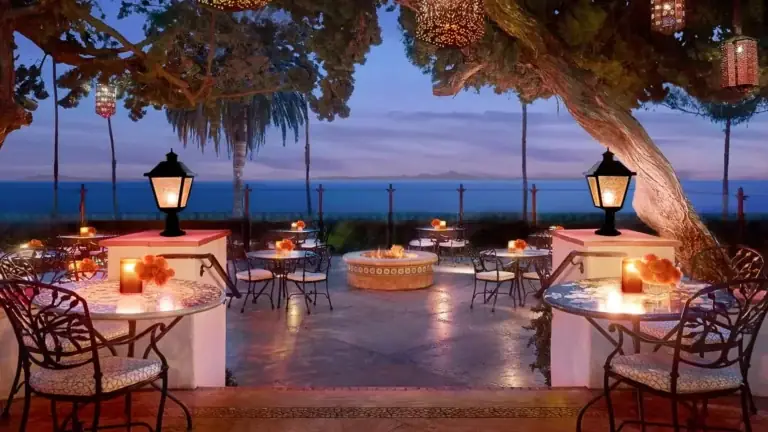
Dubbed the American Riviera, Santa Barbara and neighboring Montecito blend Mediterranean climate stability with mountain-to-sea geography, exemplified by San Ysidro Ranch, Rosewood Miramar Beach, and The Milo, Hotel by the Sea. Further south in Orange County, the artist-colony coves of Laguna Beach host intimate bluff-top and village sanctuaries such as Casa Laguna Hotel & Spa, Le Petit Pali Laguna Beach, and Montage Laguna Beach.
-
Strengths: Year-round mild sunshine, swimmable sandy coves, walkable village galleries, and effortless access from Los Angeles or regional airports.
-
Trade-Offs: High weekend coastal highway congestion and premium parking and resort fees.
3. Kennebunkport & Midcoast Maine (Camden)
Maine’s rocky coastline alternates between protected working lobster harbors, spruce-clad islands, and sandy crescents. Kennebunkport pairs historic sea captains’ estates with contemporary design inns—including White Barn Inn, Auberge Resorts Collection, AWOL Kennebunkport, and Kennebunkport Captains Collection—while Camden Harbour Inn overlooks Penobscot Bay against forested hills.
-
Strengths: Authentic New England maritime culture, cold-water lobster and oyster gastronomy, and lush summer-through-foliage scenery.
-
Trade-Offs: Brisk Atlantic water temperatures even in August, and seasonal winter closures across many coastal businesses from November through April.
4. Newport, Rhode Island & Cape Cod, Massachusetts
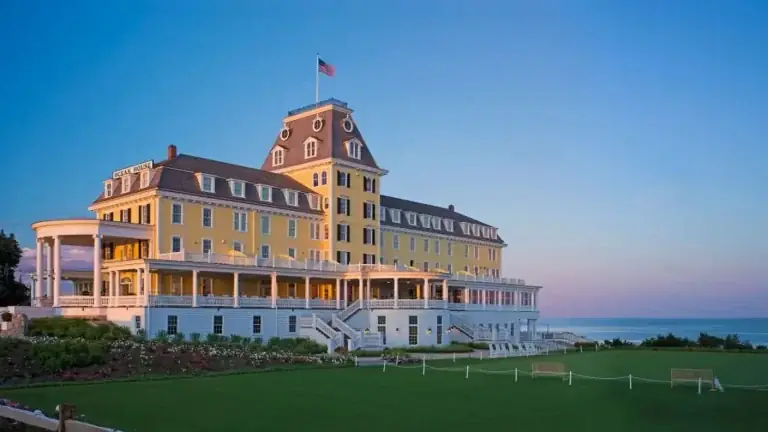
Steeped in yachting heritage and Gilded Age architecture, Newport features cliffside estates along its famous Cliff Walk, led by The Chanler at Cliff Walk (an 1873 mansion with 20 individually designed rooms overlooking Easton’s Bay) and design-forward town inns like The Attwater. Across Buzzards Bay, Cape Cod and the islands blend historic shingle-style waterfront retreats like Chatham Bars Inn and The Coonamessett with windswept National Seashore dunes.
-
Strengths: Rich sailing and architectural heritage, walkable historic harbors, and quintessential summer beach-town rhythm.
-
Trade-Offs: Severe summer bridge and highway traffic on Friday afternoons and Sunday evenings, alongside strict two- to three-night weekend minimums.
5. The Florida Keys & Miami Beach, Florida
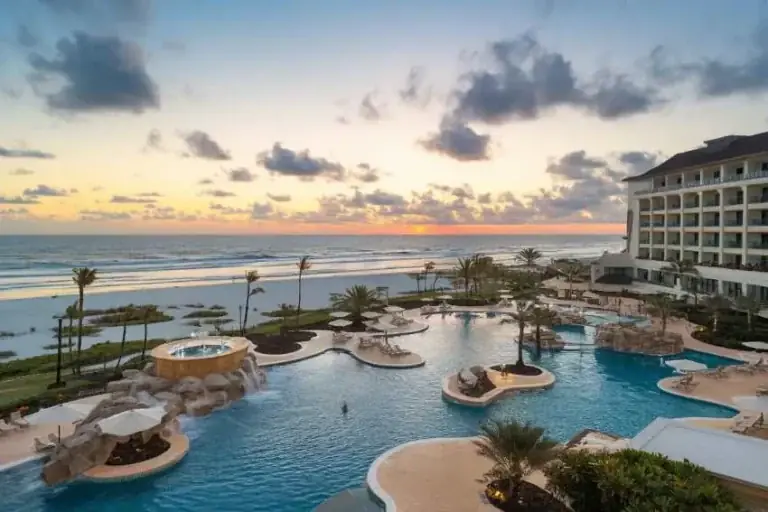
Stretching 120 miles southwest of Miami, the Florida Keys offer warm subtropical waters, coral reefs, and private-island seclusion—epitomized by Little Palm Island Resort & Spa (a 30-bungalow private island accessible only by boat or seaplane) and Casa Morada in Islamorada. At the northern gateway, Miami Beach blends restored 1940s Art Deco icons with oceanfront culinary and design culture at properties like The Shelborne By Proper, Faena Miami Beach, and The Setai.
-
Strengths: Warm year-round ocean swimming, premier flats fishing and diving, and vibrant winter sun reliability from December through April.
-
Trade-Offs: Peak hurricane season vulnerability from August through October and high summer humidity.
6. Montauk, New York & The Chesapeake Bay (St. Michaels, Maryland)
At the eastern tip of Long Island, Montauk pairs Atlantic surf breaks with minimalist coastal design at properties like Marram Montauk. Further south along Maryland’s Eastern Shore, St. Michaels offers calm estuarine sailing, blue-crab culinary heritage, and manicured waterfront lawns at Inn at Perry Cabin.
-
Strengths: Easy drive-to access from major Northeast metro hubs (New York, Washington, D.C., Philadelphia) paired with distinct maritime character.
-
Trade-Offs: Intense peak summer demand requiring four- to six-month reservations for prime weekend rooms.
7. Oregon Coast & Columbia River Estuary (Astoria / Cannon Beach)
Where Pacific Northwest temperate rainforests meet dramatic sea stacks and river-mouth shipping channels, destinations like Astoria and Cannon Beach offer moody, storm-watching coastal beauty—highlighted by Cannery Pier Hotel & Spa, built on pilings extending 600 feet into the Columbia River beneath the Astoria-Megler Bridge.
-
Strengths: Dramatic evergreen-meets-ocean vistas, storm-watching winter appeal, and uncrowded cool-weather beaches.
-
Trade-Offs: Frequent rain and cool coastal winds outside the brief July-to-September dry window.
Realistic Decision Logic for Coastal Destination Selection
Matching traveler priorities with the right shoreline archetype prevents seasonal and environmental mismatches:
-
Prioritizing Warm Ocean Swimming & Winter Sun (November–April): Select the Florida Keys, Miami Beach, or Southern California’s sheltered coves (Montecito, Laguna Beach). Only subtropical Florida and Southern California deliver comfortable winter water or poolside warmth.
-
Seeking Dramatic Cliffside Scenery, Hiking & Fine Dining: Choose Big Sur, Sonoma Coast, or Midcoast Maine. Accepting cold ocean water unlocks dramatic granite or redwood bluffs, uncrowded coastal trails, and top-tier culinary sanctuaries.
-
Targeting Walkable Historic Harbor Towns & Sailing Culture: Deploy Newport, Kennebunkport, Cape Cod, or St. Michaels between June and October for classic New England or Chesapeake maritime charm.
Detailed Real-World Scenarios and Operational Stress Testing
Examining how shoreline boutique trips behave under real-world environmental and logistical stress exposes hidden vulnerabilities in microclimates, highway corridors, and beachfront zoning.
The July “June Gloom” Coastal Fog Mismatch in California
-
Constraints: Travelers from the East Coast book a four-night July stay in Big Sur, Carmel, or Santa Barbara, expecting hot, cloudless summer beach weather based on inland California temperatures.
-
Decision Points: Applying inland summer weather assumptions to cold-current Pacific coastlines.
-
Failure Modes: Warm inland air pulls dense marine layer fog across the coast every morning, keeping coastal temperatures in the low 60s until mid-afternoon while inland valleys 15 miles away hit 90°F.
-
Second-Order Effects: Guests pack only lightweight swimwear and miss out on California’s true coastal summer peak (September and October), when offshore winds clear the fog and warm the coast into the upper 70s.
Single-Corridor Highway & Ferry Bottlenecks
-
Constraints: Travelers book a Friday-to-Sunday stay in Big Sur, Montauk, Cape Cod, or Nantucket without auditing single-artery transit chokepoints.
-
Decision Points: Departing major metro hubs at 3:00 PM on a summer Friday or relying on tight ferry connections.
-
Failure Modes: Traffic along Long Island’s Route 27, Cape Cod’s Sagamore Bridge, or Highway 1 doubles or triples transit times, while winter storm swells or rockslides can close coastal roads or cancel island ferries entirely.
-
Second-Order Effects: Guests lose half of their arrival evening to transit delays, whereas shifting arrival to Thursday evening or Sunday afternoon eliminates corridor gridlock.
Public Beachfront vs. Private Sanctuary Friction
-
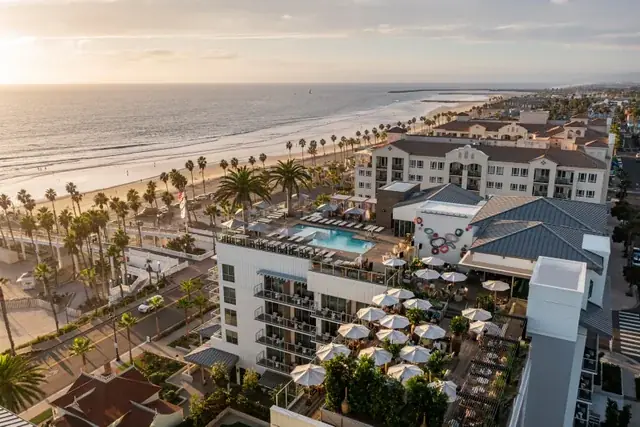
Constraints: A couple books an “oceanfront” boutique hotel in a lively beach town (such as Santa Monica, Venice, or South Beach), expecting secluded beachfront quietude.
-
Decision Points: Confusing “oceanfront across a public boardwalk/bike path” with private direct-sand frontage.
-
Failure Modes: Heavy public beachgoers, cyclists, and street musicians pass directly outside ground-floor terraces from sunrise until midnight.
-
Second-Order Effects: Acoustic privacy is compromised unless guests book upper-floor ocean-view suites or choose gated/bluff-isolated properties like San Ysidro Ranch or Little Palm Island.
Planning, Cost, and Resource Dynamics
Evaluating shoreline boutique expenditure requires accounting for extreme seasonal rate dispersion, coastal parking scarcity, and unbundled beach-club or transfer tariffs.
Direct vs. Indirect Cost Architecture
In premier coastal towns, strict zoning caps keep room supply permanently fixed, driving steep seasonal rate multipliers. Direct costs encompass baseline suite tariffs and pre-booked dining packages. Indirect costs frequently include mandatory daily coastal amenity or beach-chair fees ($40 to $85 per night), overnight valet parking ($50 to $85 per night in dense seaside villages where street parking is prohibited overnight), ferry or private boat transfers, and coastal seafood dining surcharges.
| Cost Component | New England Harbor Inn (Peak Summer) | California Bluff / Riviera Boutique | Private Island / Ultra-Luxury Coastal |
| Base Room / Suite Rate (Per Night) | $550 – $1,100 | $850 – $1,900 | $1,800 – $4,200+ |
| Mandatory Coastal / Beach Fees | $35 – $65 / night + 11%–15% tax | $50 – $85 / night + 14%–16% tax | Included or island transfer fee |
| Overnight Valet / Ferry / Boat Transit | $35 – $60 / night (Or $80–$150 ferry) | $55 – $85 / night (Valet) | $300 – $800 (Private boat/seaplane) |
| Local Seafood Dining & Cocktails | $180 – $350 / couple/day | $250 – $500 / couple/day | $300 – $600 / couple/day |
| Spa & Marine Excursions (Sailing/Kayak) | $200 – $450 / activity | $250 – $550 / activity | $300 – $700 / activity |
| Estimated 3-Night Couple Outlay | $2,600 – $5,200 | $3,900 – $8,500 | $6,800 – $15,500+ |
Tools, Strategies, and Support Systems
Navigating the top coastal boutique hotel destinations in the USA requires leveraging regional microclimate calendars, parcel sightline mapping, and consortia channels while recognizing their practical limits.
-
Regional Microclimate & Fog-Clearance Calendars
-
Utility: Scheduling California coast trips in September–October, New England coast trips in June–September, and Florida Keys trips in December–April aligns bookings with peak meteorological clarity.
-
Limits: Unseasonal coastal storms or offshore wind shifts can still alter local conditions within 48 hours.
-
-
Satellite Parcel & Public-Boardwalk Proximity Audits
-
Utility: Inspecting a coastal hotel’s exact coordinates on satellite imagery reveals whether the property sits directly on private sand, perches across a busy coastal highway (such as Highway 1 or A1A), or borders a crowded public pier.
-
Limits: Satellite imagery cannot capture seasonal beach erosion or winter kelp/sargassum accumulation.
-
-
Luxury Consortia Preferred Partner Channels
-
Utility: Reserving coastal boutique leaders (such as Post Ranch Inn, Rosewood Miramar Beach, White Barn Inn, or Little Palm Island) through accredited luxury advisors unlocks daily full breakfast, $100 to $200 property credits, and priority ocean-view upgrades at identical direct tariffs.
-
Limits: Upgrade availability is tightly constrained at 20- to 40-key properties during peak summer or winter weekends.
-
-
Caltrans / State DOT & Marine Ferry Status Trackers
-
Utility: Monitoring real-time coastal highway advisories (essential for Big Sur’s Highway 1) and ferry schedules (essential for Nantucket, Martha’s Vineyard, and San Juan Islands) prevents transit surprises.
-
Limits: Winter mudslides or high marine winds can trigger sudden closures with minimal advance notice.
-
-
Direct On-Site Reservation Desk Sightline Verification
-
Utility: Calling the property’s local reservation desk before booking confirms whether an “Ocean View” room offers full unobstructed horizon vistas or a narrow partial glimpse between neighboring roofs.
-
Limits: Most boutique hotels assign exact room numbers 24 to 48 hours before arrival rather than at booking.
-
-
Risk Landscape, Failure Modes, and Compounding Disruption
Shoreline boutique travel carries distinct meteorological, infrastructural, and financial vulnerabilities that frequently compound when coastal weather or transit corridors experience disruption.
Taxonomy of Coastal Boutique Failure Modes
-
Sightline & Highway Acoustic Intrusion: Booking an “ocean-view” room at a coastal boutique hotel separated from the beach by a busy coastal highway, trading ocean wave sounds for motorcycle and delivery truck noise.
-
Single-Artery Corridor Isolation: Experiencing a landslide, bridge closure, or hurricane evacuation along single-access peninsulas and barrier islands.
-
Seasonal Amenity & Restaurant Contraction: Visiting seasonal New England or Pacific Northwest coastal towns in November or April when half of local seafood restaurants, boat charters, and beach clubs are closed for the season.
-
Salt-Air & Historic Maintenance Variance: Historic wooden seaside inns require continuous exterior maintenance; deferred upkeep can occasionally surface as aging window seals or damp coastal room humidity.
Compounding failure cascades often unfold when travelers book a non-refundable Friday-to-Sunday stay in a coastal village during peak summer, hit three-hour highway gridlock, receive a highway-facing partial-view room, and find all waterfront restaurants booked solid.
Governance, Maintenance, and Long-Term Adaptation
Protecting financial commitments and ensuring seamless coastal execution requires executing a structured pre-arrival verification protocol.
Pre-Arrival Coastal Boutique Audit Checklist
Execute these verification steps 30 to 10 days before departure to eliminate littoral and logistical friction:
-
Sightline & Highway Buffer Verification: Confirm directly with the property whether your booked room category sits on the ocean side of coastal roads/boardwalks and request upper-floor placement for unobstructed horizon views.
-
Beach Access & Gear Inclusion Check: Verify whether the property provides complimentary beach chairs, umbrellas, towels, and kayaks—or charges daily beach-club setup fees—and confirm walking distance to the sand.
-
Transit, Parking & Ferry Lock: Reserve overnight valet parking, EV chargers, ferry vehicle spaces, or private island boat/seaplane transfers immediately upon confirming lodging.
-
Waterfront Dining & Weather Contingency Check: Secure prime sunset dinner reservations weeks ahead and confirm the property’s hurricane or road-closure modification policy during storm-prone seasons.
Measurement, Tracking, and Evaluation Frameworks
Assessing the true return on investment of a coastal boutique trip requires tracking both financial transparency and littoral experiential quality.
Quantitative vs. Qualitative Evaluation Matrix
-
Quantitative Metrics: True All-In Cost Per Coastal Night, Transit-to-Stay Time Efficiency Ratio, Unobstructed Ocean Sightline Percentage, and Ancillary Beach/Parking Fee Ratio.
-
Qualitative Signals: Acoustic Balance (ocean surf vs. highway or boardwalk noise), Littoral Ease of Access, Regional Seafood Culinary Provenance, and Microclimate Comfort Alignment.
-
Leading vs. Lagging Indicators: Seasonal microclimate alignment, ocean-side room verification, and mid-week arrival serve as leading indicators of a seamless stay. Uninterrupted sleep to ocean acoustics, effortless beach or harbor access, and transparent checkout folios represent lagging indicators of sound destination selection.
Common Misconceptions and Structural Oversimplifications
Mainstream travel media frequently perpetuates oversimplifications regarding American coastal destinations that lead to misaligned seasonal and spatial expectations.
- Myth 1: “Coastal” and “Oceanfront” Always Mean Warm Swimmable Beaches
-
Correction: Across Northern California, the Pacific Northwest, and coastal Maine, ocean water temperatures remain between 50°F and 62°F year-round, making dramatic cliffside trails, heated pools, and coastal gastronomy the primary draw rather than ocean swimming.
- Myth 2: Midsummer (July–August) Is Always Peak Weather on Every US Coast
-
Correction: While July and August peak in New England and the Pacific Northwest, California’s central and northern coasts experience heavy morning marine fog in midsummer and reach their warmest, clearest peak in September and October, while South Florida peaks in winter.
- Myth 3: Boutique Coastal Hotels Own Private Exclusive Beaches Nationwide
-
Correction: In states like California, Oregon, and Hawaii, state law guarantees public access to all beaches up to the mean high-tide line; privacy at premier coastal boutique hotels comes from bluff elevation, gated estate setbacks, or remote island access rather than private sand ownership.
Ethical, Practical, and Contextual Considerations
Operating boutique hospitality along fragile coastlines intersects directly with marine conservation, sea-level resilience, and local fishing-community economies.
Marine Ecosystem Protection and Coastal Setbacks
Shoreline erosion, king tides, and coral reef stress require responsible operational stewardship. Leading coastal boutique operators eliminate single-use plastics, provide reef-safe mineral sunscreens, treat greywater on-site, adhere to sea-turtle dark-sky lighting rules along nesting beaches, and build behind sustainable coastal erosion setbacks.
Supporting Regional Maritime and Agricultural Economies
Independent coastal boutique properties act as vital economic anchors for local oyster farmers, day-boat fishermen, vineyard growers, and maritime guides, preserving working harbor heritage and keeping tourism expenditure rooted in coastal communities.
Strategic Conclusion and Operational Synthesis
Evaluating the top coastal boutique hotel destinationsin the USAa effectively requires looking past sunset ocean photography, nautical styling, and generic beach lists. Achieving genuine shoreline serenity, reliable weather alignment, unobstructed ocean acoustics, and financial clarity demands an analytical approach grounded in evaluating littoral access profiles, regional microclimate calendars, single-corridor transit logistics, and all-in parking and beach-club costs.
By applying structured evaluation frameworks—such as the Littoral Access to Sightline Ratio, the Microclimate Alignment Index, and the True Net Coastal Stay Cost Metric—travelers and hospitality planners can match shoreline geography to their exact seasonal and experiential goals. Combining microclimate-aware scheduling with direct sightline verification and mid-week arrival planning ensures that a stay across the top coastal boutique hotel destinations in the USA delivers enduring maritime craft and restorative calm.