Best Luxury Boutique Hotels in the US: Architecture & Evaluation Guide
The ultra-luxury small-footprint hotel sector in the United States operates at a demanding intersection of fixed labor economics, architectural non-standardization, bespoke service calibration, and inventory scarcity. Unlike convention-anchored urban towers that rely on standardized floor plates, or sprawling mega-resorts built around large campuses, premier domestic boutique properties derive their market defensibility from low key density, localized cultural provenance, and hyper-personalized service. From converted townhouses in Manhattan and cliffside estates in Big Sur to desert sanctuaries in Utah and vineyard compounds in Napa Valley, these properties represent a distinct asset class where operational variables behave differently than in chain hospitality.
Evaluating small-scale luxury properties requires looking past curated photography, amenity claims, and lifestyle rankings. True operational viability depends on how a hotel amortizes executive culinary and concierge payrolls across fewer than one hundred rooms. It also hinges on how the physical layout insulates overnight guests from public dining or street traffic, and how distribution strategies protect rate integrity without relying on online travel agencies. When room counts sit between fifteen and ninety keys, a single wedding buyout, seasonal labor shortage, or room-category disparity alters the guest experience immediately.
Understanding “best luxury boutique hotels in the US.”
Evaluating the market of best luxury boutique hotels in the US requires separating aesthetic styling from measurable operational performance. Mainstream travel journalism routinely applies the luxury boutique label to any photogenic property featuring designer furniture, craft cocktails, or fewer than 150 rooms. From an operations standpoint, however, a true luxury boutique hotel is defined by four structural criteria: low physical key count (typically 10 to 95 rooms or cottages), non-standardized architecture rooted in local topography or adaptive reuse, high staff-to-guest ratios (often exceeding 2:1), and unscripted, anticipatory service delivery.
Core Structural Audit Layers
Systematically auditing luxury boutique performance requires analyzing three core structural layers:
-
Key Density and Architectural Autonomy: Evaluate the ratio of guest accommodations to total property acreage or square footage. Assess whether standalone cottages, cliffside pavilions, or thick-walled urban suites provide genuine acoustic and visual privacy.
-
Culinary and Service Depth: Assess whether on-site dining represents a genuine regional culinary destination led by acclaimed chefs. Examine how concierge and butler teams execute bespoke off-menu requests across a small guest base.
-
Ownership and Distribution Governance: Determine whether the property operates as an independent estate, belongs to a curated alliance (such as Relais & Châteaux), or functions inside a conglomerate soft brand (such as Auberge Resorts Collection).
Common Procurement Oversights
A pervasive mistake in luxury travel procurement is assuming small room counts and high nightly rates automatically guarantee tranquility or service consistency. A 25-room urban boutique hotel on a busy nightlife corridor with historic plaster walls and a street-facing bar suffers far greater noise intrusion than a 100-key estate spread across twelve private acres. Conversely, an undercapitalized independent inn may struggle to maintain five-star housekeeping and culinary precision during seasonal labor bottlenecks.
Deep Contextual Background: Counter-Standardization, Soft Brands, and Ultra-Luxury Scale
The modern domestic luxury boutique sector emerged as a structural counter-movement against mid-twentieth-century hotel standardization. From the 1950s through the 1970s, major American hotel chains expanded nationwide by enforcing strict uniformity. They relied on identical room dimensions, standardized furniture packages, predictable dining menus, and centralized reservation systems. While this model delivered operational reliability for business travelers, it stripped destination hotels of regional architectural identity and cultural nuance.
The 1980s and 1990s Anti-Chain Shift
In the 1980s, pioneering urban hoteliers notably Ian Schrager and Steve Rubell in New York, alongside Bill Kimpton in San Francisco, demonstrated that design-led, small-footprint hotels could command substantial rate premiums over corporate towers. By the 1990s, independent developers transferred this anti-chain ethos into high-end rural and coastal sanctuaries. Properties such as Post Ranch Inn in Big Sur, Twin Farms in Vermont, San Ysidro Ranch in Montecito, and Blackberry Farm in Tennessee achieved high Average Daily Rates (ADR) by pairing local architecture with hyper-local culinary programs and wilderness seclusion.
Today, evaluating the best luxury boutique hotels in the US requires navigating a sophisticated landscape spanning ultra-private 15-to-40-key rural sanctuaries, adaptive-reuse urban landmarks in New York and New Orleans, design-led desert pavilions, and coastal estates.
Conceptual Frameworks and Mental Models for Luxury Boutique Evaluation
Objective comparison of premier small-footprint hotels requires analytical models that isolate unit economics, spatial privacy, and operational resilience.
1. The Fixed-Overhead Dilution Ratio (FODR)
Because luxury boutique hotels operate with small room inventories, fixed operational costs—such as executive chefs, sommeliers, 24-hour concierges, and grounds maintenance—must spread across far fewer keys than in a 400-room hotel. High-FODR properties either command ultra-high nightly tariffs ($1,400 to $4,500+) to fund deep staffing benches, or adopt lean, cross-trained service models. Properties caught in the middle, charging mid-tier luxury rates while attempting full-scale five-star amenity breadth, frequently experience service bottlenecks.
2. The Public-to-Resident Permeability Index (PRPI)
This framework measures how much external, non-overnight foot traffic enters the property via destination restaurants, rooftop bars, day-spa passes, or wedding buyouts. High-PRPI boutique hotels monetize local dining and nightlife traffic to subsidize room operations, which can compromise lobby calm and pool privacy for overnight guests. Low-PRPI properties restrict dining, spa, and grounds access exclusively to registered overnight guests, preserving total sanctuary containment.
3. The True Net Luxury Boutique Cost Metric (TNLBCM)
This model calculates the complete financial outlay of an upscale small-scale stay. It combines baseline suite tariffs, mandatory estate or urban destination fees, automatic service charges (20 to 24 percent at many all-inclusive estates), overnight valet parking ($55 to $95 per night in major cities), and à la carte culinary or excursion outlays, minus bundled consortia credits.
Key Categories and Structural Variations in Domestic Luxury Boutique Hotels
Premier small-scale luxury properties across the United States fall into distinct operational and architectural archetypes, each balancing key count, culinary integration, geographic setting, and pricing models differently.
Exemplary Luxury Boutique Hotel Profiles
Examining flagship properties across these categories illustrates how key count, architectural provenance, and operational containment shape the guest experience:
San Ysidro Ranch (Montecito, California)
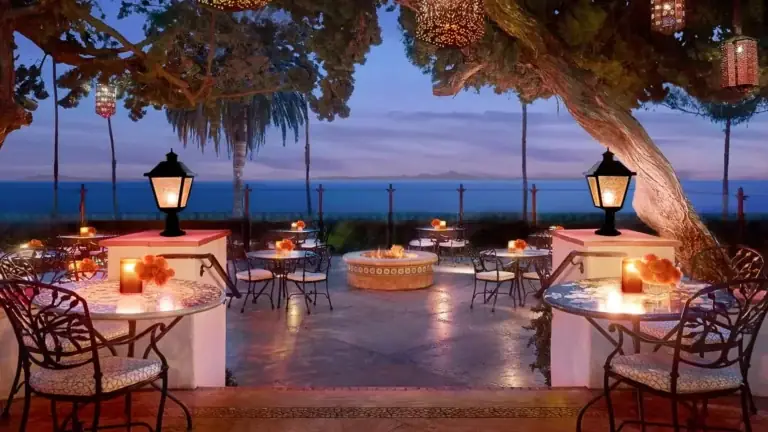
Tucked into 550 acres of coastal foothills between the Santa Ynez Mountains and the Pacific Ocean near Santa Barbara, San Ysidro Ranch features just 38 private stone-and-board-and-batten cottages surrounded by lush lavender and citrus gardens. Recognized among top global properties, it pairs historic privacy with refined dining at The Stonehouse and Plough & Angel, alongside all-inclusive dining options for overnight guests.
-
Strengths: Unmatched cottage privacy with private gated gardens and outdoor rain showers, deep historical pedigree, and seamless coastal-mountain microclimate.
-
Trade-Offs: Ultra-luxury nightly tariffs and multi-night weekend minimums that require booking months ahead.
The Fifth Avenue Hotel & The Greenwich Hotel (New York, New York)
Representing the pinnacle of Manhattan’s luxury boutique landscape, The Fifth Avenue Hotel (housed in a restored Gilded Age mansion paired with a modern glass tower in NoMad) and The Greenwich Hotel (an 88-room Tribeca sanctuary featuring an ancient Japanese bamboo-lined indoor pool and Shibui Spa) demonstrate how urban boutique properties achieve residential calm amid dense city blocks.
-
Strengths: Extraordinary interior craftsmanship, protected guest-only sanctuaries (such as The Greenwich Hotel’s resident drawing room and courtyard), and top-tier culinary execution.
-
Trade-Offs: High nightly Manhattan tariffs, steep overnight valet charges, and strong public demand for on-site restaurants.
Amangiri (Canyon Point, Utah)
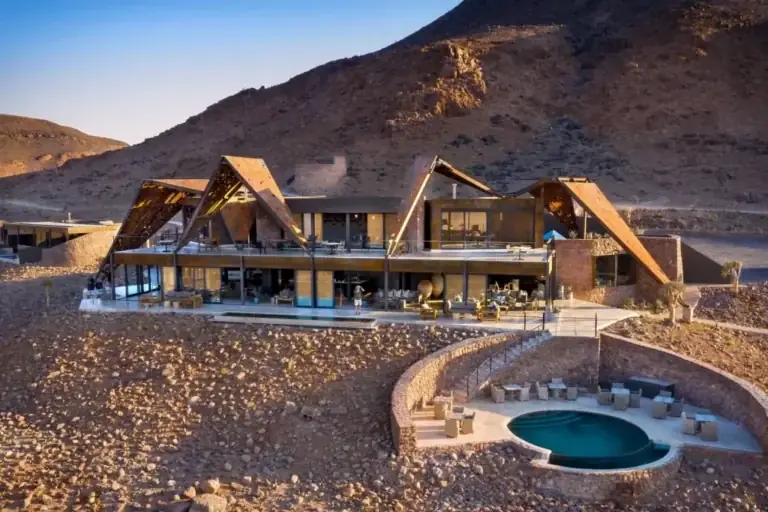
Set across 600 private acres of raw Colorado Plateau desert near the Utah-Arizona border, Amangiri’s 34 minimalist concrete suites and 10 canvas-topped Camp Sarika pavilions blend seamlessly into surrounding Entrada sandstone mesas, anchored by a 25,000-square-foot spa and private slot-canyon guiding.
-
Strengths: Dramatic geological isolation, architectural purity, private plunge pools and sky terraces, and deep desert wellness programming.
-
Trade-Offs: Requires regional flights into Page, Arizona, or multi-hour drives from Las Vegas or Flagstaff, alongside top-tier global pricing.
Post Ranch Inn (Big Sur, California)
Perched 1,200 feet above the Pacific Ocean along California’s rugged Highway 1, this 40-room adults-only architectural icon features cliffside suites, treehouses, and ocean-view villas built from sustainable redwood, glass, and stone without televisions. Nightly rates include gourmet breakfast, daily yoga, and guided nature walks, complemented by dining at Sierra Mar.
-
Strengths: Unrivaled coastal bluff topography, strict guest-only sanctuary containment (zero outside public access except limited lunch/dinner reservations), and profound quietude.
-
Trade-Offs: Periodic Highway 1 landslide closures require detour routing, and summer marine fog frequently blankets the coast until midday.
Twin Farms (Barnard, Vermont)
Spanning 300 private acres of woodland and meadow in central Vermont, Twin Farms accommodates guests across just 28 uniquely designed cottages, treehouses, and main-house suites on an adults-only, all-inclusive basis—bundling custom-crafted meals, cellar wines, spirits, and seasonal sporting gear into a single daily rate.
-
Strengths: Total sanctuary privacy with zero external public traffic, bespoke farm-to-table dining without fixed menus, and zero check-signing friction.
-
Trade-Offs: High upfront nightly pricing and strict booking lead times for peak autumn foliage and winter ski weekends.
Hotel Saint Vincent & Hotel Peter and Paul (New Orleans, Louisiana)
Showcasing the strength of adaptive-reuse Southern boutique hospitality, Hotel Saint Vincent (a restored 1861 orphanage compound in the Lower Garden District with 75 rooms) and Hotel Peter and Paul (a converted 19th-century church, schoolhouse, rectory, and convent in the Marigny with 71 rooms) pair historic architectural preservation with vibrant neighborhood culinary and cocktail culture.
-
Strengths: Deep architectural authenticity, vibrant local design and culinary energy, and accessible luxury price points relative to coastal California or Manhattan.
-
Trade-Offs: Higher PRPI due to popular neighborhood restaurants and courtyard bars, making room selection away from social courtyards important for light sleepers.
Auberge du Soleil (Rutherford, California)
Overlooking the Napa Valley from a sunlit hillside olive grove, this 50-room adult-oriented sanctuary combines French-inspired California architecture with Michelin-starred dining, an expansive sculpture garden, and private vineyard tasting access.
-
Strengths: Sweeping valley panoramas, intimate hillside terrace privacy, and deep integration with premier Napa Valley vintners.
-
Trade-Offs: Peak harvest season tariffs and strict 30-day cancellation cutoffs.
Hotel Bel-Air (Los Angeles, California)
Tucked into 12 acres of lush canyon gardens in Bel-Air Estates, this historic 1946 bungalow sanctuary offers 103 rooms and suites connected by swan-filled streams, shaded pathways, and secluded garden patios.
-
Strengths: Rare residential canyon seclusion minutes from Beverly Hills, classic Old Hollywood heritage, and lush botanical landscaping.
-
Trade-Offs: Canyon winding roads require valet reliance, and weekend dining at Wolfgang Puck at Hotel Bel-Air attracts heavy local traffic.
Realistic Decision Logic for Property Selection
Matching traveler priorities with the right luxury boutique archetype prevents structural and spatial mismatches:
-
Prioritizing Total Sanctuary Privacy & All-Inclusive Ease: Select Twin Farms, San Ysidro Ranch, or Post Ranch Inn. Restricting campus access solely to overnight guests and bundling dining eliminates restaurant reservation stress and public crowd intrusion.
-
Seeking Urban Architectural Craft & Culinary Energy: Choose The Greenwich Hotel, The Fifth Avenue Hotel, or Hotel Saint Vincent. Positioning guests inside culturally rich neighborhoods delivers world-class design and dining while maintaining a protected residential retreat upstairs.
-
Targeting Dramatic Wilderness & Minimalist Design: Deploy Amangiri or Ambiente Sedona. Low-impact structures placed directly inside dramatic desert landscapes deliver unmatched visual immersion and dark-sky solitude.
Detailed Real-World Scenarios and Operational Stress Testing
Examining how luxury boutique hotel stays behave under real-world operational stress exposes vulnerabilities unique to low-key-count properties.
Full-Property Wedding or Corporate Buyout Displacement
-
Constraints: A couple plans a milestone anniversary trip to a 35-room coastal or wine-country boutique hotel during peak October shoulder season, waiting until six weeks prior to book.
-
Decision Points: Delaying reservation confirmation at a sub-50-key property versus locking inventory four to six months ahead.
-
Failure Modes: Because small-footprint luxury hotels rely heavily on lucrative full-property buyouts for private weddings and executive retreats, entire three- and four-night blocks vanish from public availability overnight.
-
Second-Order Effects: Remaining fragmented mid-week dates force awkward split stays or complete destination pivots, demonstrating why luxury boutique properties demand longer booking lead times than large chain resorts.
High-PRPI Restaurant & Courtyard Noise Spillover
-
Constraints: Travelers book a weekend stay at a renowned urban or Southern adaptive-reuse boutique hotel celebrated for its buzzing courtyard restaurant and late-night cocktail lounge.
-
Decision Points: Selecting a standard courtyard-facing room without auditing evening bar hours and acoustic glazing.
-
Failure Modes: While the guest room design is impeccable, live music and courtyard dining chatter continue until midnight directly beneath single-paned historic windows.
-
Second-Order Effects: Sleep quality suffers despite five-star thread counts, whereas requesting an upper-floor exterior-facing suite or quiet residential wing preserves rest.
Room-Tier Variance in Adaptive-Reuse Historic Landmarks
-
Constraints: A guest books an entry-level “Classic Room” at a converted historic mansion or townhouse hotel based on lobby and penthouse suite photography.
-
Decision Points: Booking the lead-in rate category without verifying exact floor area and window orientation.
-
Failure Modes: Historic architectural floor plates cannot be standardized; entry-level rooms tucked under attic dormers or facing interior brick light wells often measure under 250 square feet.
-
Second-Order Effects: Stepping up one or two room categories—often an extra $120 to $200 per night—unlocks dramatically better natural light, ceiling height, and layout flow.
Strict 30- to 45-Day Cancellation Cutoff Exposure
-
Constraints: An executive reserves a four-night autumn stay at a 28-room New England or mountain luxury inn, placing a 50 percent deposit at booking.
-
Decision Points: Overlooking the property’s seasonal 30-day non-refundable cancellation clause, which differs sharply from standard 48-hour corporate hotel rules.
-
Failure Modes: A sudden family or business conflict forces cancellation 18 days before check-in.
-
Second-Order Effects: Because a cancelled suite in a 28-room property represents nearly 4 percent of nightly inventory, management enforces the deposit forfeiture strictly unless the guest carries trip-cancellation insurance.
Planning, Cost, and Resource Dynamics
Evaluating luxury boutique hotel expenditure requires understanding why small-footprint properties carry higher baseline tariffs, automatic service charges, and stricter deposit rules than large chain resorts.
Direct vs. Indirect Cost Architecture
In a 30- to 60-room luxury boutique hotel, fixed payroll for executive chefs, sommeliers, concierges, and groundskeepers spreads across a small room count, driving higher baseline nightly tariffs. Direct costs encompass suite rates and bundled meal packages. Indirect costs frequently include mandatory daily urban or estate destination fees ($45 to $95 per night), overnight valet parking ($55 to $95 per night in major cities), automatic 20 to 24 percent service charges at all-inclusive estates, and private regional transfers.
Tools, Strategies, and Support Systems
Navigating the best luxury boutique hotels in the US requires leveraging specialized consortia networks, direct property relationships, and spatial verification tools while recognizing their practical limits.
-
Luxury Travel Advisor Preferred Partner Channels
-
Utility: Booking affiliated properties through accredited luxury consortia (Virtuoso, American Express Fine Hotels + Resorts, Relais & Châteaux, or brand-specific preferred partner programs) secures direct Best Available Rates alongside daily full breakfast, $100 to $200 property credits, early check-in, and priority room upgrades.
-
Limits: Upgrade availability is naturally constrained at 20- to 40-room properties where top suites sell out months early.
-
-
Curated Independent Alliances & Soft-Brand Ecosystems
-
Utility: Directories such as Relais & Châteaux, Small Luxury Hotels of the World, Design Hotels, and Auberge Resorts Collection pre-vet properties for architectural integrity, culinary rigor, and service standards while offering member loyalty perks.
-
Limits: Membership indicates editorial vetting rather than uniform ownership; room sizes and service styles still vary by building.
-
-
Direct On-Site Reservation Desk Floor-Plan Audits
-
Utility: Calling the property’s on-site reservation manager prior to booking allows guests to verify exact square footage, window orientation, stair access, and distance from courtyard bars or kitchens.
-
Limits: Most hotels cannot guarantee an exact room number months in advance, though they log specific wing and floor notes in the PMS.
-
Risk Landscape, Failure Modes, and Compounding Disruption
Small-footprint luxury hospitality carries distinct operational, financial, and logistical vulnerabilities that behave differently than risks at large corporate hotels.
Taxonomy of Luxury Boutique Failure Modes
-
Key-Person Dependency Risk: Because independent boutique properties rely heavily on individual executive chefs, general managers, or head concierges rather than rigid corporate manuals, the departure of a key culinary or leadership figure can noticeably shift property execution within months.
-
Public-Venue Crowd Dilution: Properties that monetize popular public restaurants, rooftop lounges, or day-spa passes to supplement low room counts can lose their tranquil residential feel on busy weekends.
-
Rigid Deposit & Cancellation Exposure: Strict 30- to 60-day non-refundable cancellation policies expose travelers to substantial financial penalties if flights are disrupted or schedules shift unexpectedly.
-
Amenity Footprint Constraints: Compact physical parcels naturally limit facility breadth; most boutique hotels feature one signature restaurant, one pool, and an intimate spa rather than sprawling athletic complexes.
Compounding failure cascades often unfold when a traveler books a non-refundable weekend stay via a third-party aggregator, receives a compact street-facing room, discovers the courtyard is closed for a private event, and cannot secure a table at the single on-site restaurant.
Governance, Maintenance, and Long-Term Adaptation
Protecting financial commitments and experiential quality at small-scale luxury hotels requires executing a structured pre-arrival verification protocol.
Pre-Arrival Luxury Boutique Audit Checklist
Execute these verification steps 45 to 14 days before departure to eliminate scheduling and spatial friction:
-
Private Buyout & Event Check: Confirm directly with the reservation team that no private weddings, corporate retreats, or restaurant buyouts are scheduled during your stay dates that could close pools, gardens, or dining rooms.
-
Room Geometry & Acoustic Placement: Verify minimum square footage for your booked category and log written requests for an upper-floor, corner, or garden-facing room away from street corridors and courtyard lounges.
-
All-In Service Charge & Fee Audit: Clarify whether mandatory destination fees or automatic 20 to 24 percent service charges cover staff gratuities or require supplemental tipping.
-
Dining, Spa & Valet Lock: Confirm written reservations for all on-site dinners, spa appointments, and overnight valet or airport transfers before departure.
Measurement, Tracking, and Evaluation Frameworks
Assessing the true return on investment of a luxury boutique stay requires tracking both financial transparency and qualitative experiential indicators.
Quantitative vs. Qualitative Evaluation Matrix
-
Quantitative Metrics: True All-In Cost Per Stay Night, Staff-to-Key Ratio (top luxury boutique benchmarks exceed 2:1), Acreage- or Square-Footage-Per-Key Buffer, and Unplanned Surcharge Variance.
-
Qualitative Signals: Staff Anticipatory Personalization (recalling preferences seamlessly without scripted repetition), Acoustic Privacy Across Suites and Courtyards, Culinary Provenance and Menu Execution, and Arrival/Departure Discretion.
-
Leading vs. Lagging Indicators: Direct or consortia channel booking, mid-tier or higher room selection, and simultaneous dining locks serve as leading indicators of a friction-free stay. Effortless relaxation, high culinary memorability, and transparent checkout folios represent lagging indicators of true property excellence.
Common Misconceptions and Structural Oversimplifications
Mainstream travel media frequently perpetuates oversimplifications regarding luxury boutique hotels that lead to misaligned expectations and booking errors.
- Myth 1: Small Room Count Automatically Guarantees Zero Crowds Anywhere on Property
-
Correction: If a 35-room urban or wine-country boutique hotel operates a 110-seat public restaurant or popular cocktail lounge, ground-floor common areas can feel busier on weekends than a 200-room private-access resort.
- Myth 2: Every Room Inside a Luxury Boutique Hotel Shares Identical Layout and Comfort
-
Correction: Because boutique properties occupy historic landmarks or custom hillside structures, room square footage, natural light, ceiling height, and bathroom configurations vary dramatically even within the same rate tier.
- Myth 3: Soft-Branded Luxury Boutique Hotels Are Standardized Corporate Chains
-
Correction: Soft brands and luxury collections such as Auberge Resorts Collection or Hyatt’s Unbound Collection preserve independent architecture, local culinary leadership, and boutique key counts while providing global reservation and loyalty infrastructure.
Ethical, Practical, and Contextual Considerations
Booking directly or through accredited luxury travel advisors carries meaningful economic implications for independent hospitality operators and host communities. Third-party online travel agencies extract 15 to 25 percent commissions from small-footprint properties, capital that otherwise supports staff wages, historic building preservation, and local culinary sourcing. Engaging directly with on-property reservation teams or preferred partner advisors aligns traveler incentives with sustainable independent hospitality while unlocking superior room-assignment care.
Furthermore, leading domestic luxury boutique hotels such as Post Ranch Inn, Twin Farms, and Amangiri demonstrate how low-density architecture, native xeriscaping, on-site regenerative agriculture, and regional artisan partnerships preserve fragile coastal, mountain, and desert landscapes while delivering high-touch hospitality.
Strategic Conclusion and Operational Synthesis
Evaluating the best luxury boutique hotels in the US effectively requires looking past curated interior photography, small key counts, and subjective lifestyle awards. Achieving genuine intimacy, architectural authenticity, unhurried service velocity, and financial predictability demands an analytical approach grounded in evaluating fixed-overhead unit economics, public-to-resident permeability, room-category geometry, and all-in fee structures.
By applying structured evaluation frameworks such as the Fixed-Overhead Dilution Ratio, the Public-to-Resident Permeability Index, and the True Net Luxury Boutique Cost Metric, travelers and hospitality planners can distinguish truly self-contained sanctuaries from high-traffic public-facing landmarks. Combining early reservation locking with pre-arrival event audits and direct room-placement verification ensures that the craft, discretion, and sense of place defining the best luxury boutique hotels in the US translate seamlessly from screen to stay.